
How to clean leather work gloves easily comes down to two priorities that fight each other a bit: remove sweat, dirt, and oils without soaking or stripping the leather. If you get that balance right, gloves stay flexible, stop smelling as fast, and last longer.
Most glove-cleaning mistakes happen for understandable reasons, you come home tired, gloves are caked in grime, and it feels logical to rinse them hard or toss them in the wash. But leather is skin, it absorbs, it dries out, and once it turns stiff or cracks, you can’t really “wash” your way back.
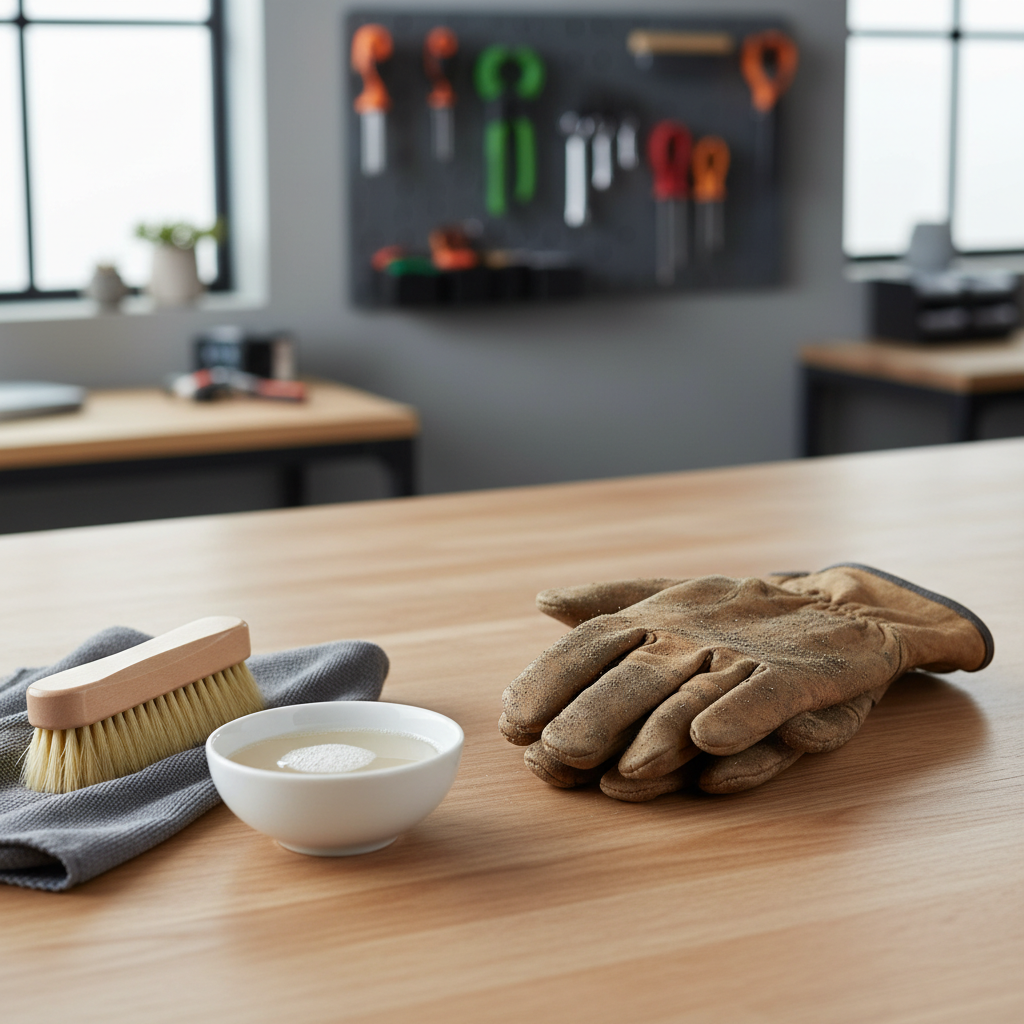
This guide focuses on what works for typical U.S. jobsite gloves, ranch gloves, and shop gloves, with practical “if this, then that” steps. You’ll also see a quick table for common messes, a self-check list, and a simple routine you can repeat without overthinking.
What leather gloves can handle (and what they can’t)
Leather work gloves handle abrasion and heat well, but they don’t love saturation, harsh detergents, or high heat drying. When leather takes on too much water, the fibers swell and then tighten as they dry, which is why gloves turn board-stiff.
According to the Leather Research Laboratory (University of Cincinnati), leather care typically emphasizes avoiding excessive wetting and using appropriate conditioners to maintain flexibility. In plain terms, clean gently, dry slowly, then restore oils.
- Usually safe: wiping with a damp cloth, mild soap, soft brushing, air-drying, light conditioning.
- Risky: soaking in a bucket, strong degreasers, bleach, machine washing, direct sun baking, dryers, heaters.
- Special case: suede or rough-out leather needs different handling than smooth grain.
Before you start: a quick glove check (30 seconds)
Before you try to clean anything, decide what kind of “dirty” you’re dealing with. This keeps you from using a method that solves one problem and creates a bigger one.
- Is it just surface dust? If yes, dry brush and wipe might be enough.
- Are the gloves stiff already? If yes, skip aggressive scrubbing and plan to condition after cleaning.
- Any oil/grease spots? If yes, avoid water-first cleaning, start with absorbent powder.
- Any chemical exposure? If you worked with solvents, pesticides, wet concrete, or unknown chemicals, replacement may be safer than “saving” the gloves.
- Lined or insulated? Linings trap sweat, you may need extra deodorizing and longer drying time.
Key point: If gloves protected you from something you wouldn’t want on your skin, it’s worth asking whether cleaning is appropriate or whether disposal is the safer call.
Tools and products that make cleaning easier (no fancy kit required)
You can keep this simple, most people already have what they need. The goal is gentle mechanical cleaning plus a mild cleaner, not a “power wash” approach.
- Soft brush (horsehair or a clean nylon nail brush)
- Microfiber cloths or clean cotton rags
- Mild soap (unscented dish soap works in many cases)
- A small bowl of lukewarm water
- Leather conditioner (light, non-greasy works best for work gloves)
- Baking soda or cornstarch (for odor or grease)
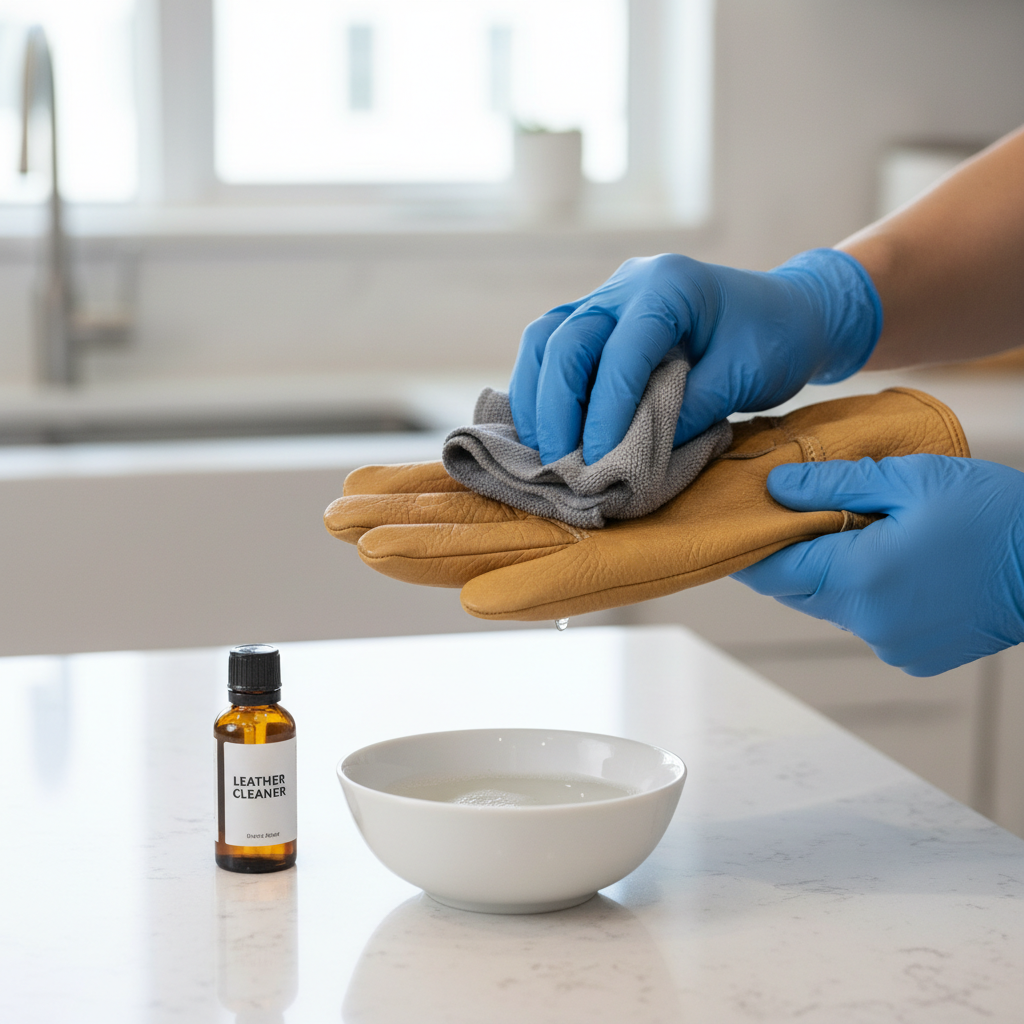
What to skip most of the time: saddle soap is popular, but some formulas can be too strong or leave residue if overused. If you use it, use very little and wipe thoroughly.
The easiest method: routine clean for everyday grime
If you’re cleaning “normal dirty” gloves, dust, dried mud, sweat marks, this routine is the most repeatable approach. It’s also the method least likely to ruin the leather.
1) Dry brush first
Brush seams, fingertips, and creases where grit hides. This step feels small, but it reduces how much moisture you’ll need later.
2) Wipe with a barely damp cloth
Dampen a cloth with lukewarm water, wring hard, then wipe down the leather. If the cloth leaves visible wet trails, it’s too wet.
3) Add mild soap only where needed
Mix a drop or two of mild dish soap into the bowl, then dip the cloth and wring again. Focus on high-contact zones: palm, thumb pad, fingertips. Avoid flooding stitching.
4) Remove soap residue
Use a fresh damp cloth with plain water, wipe again. Residue can attract dirt and make gloves feel tacky.
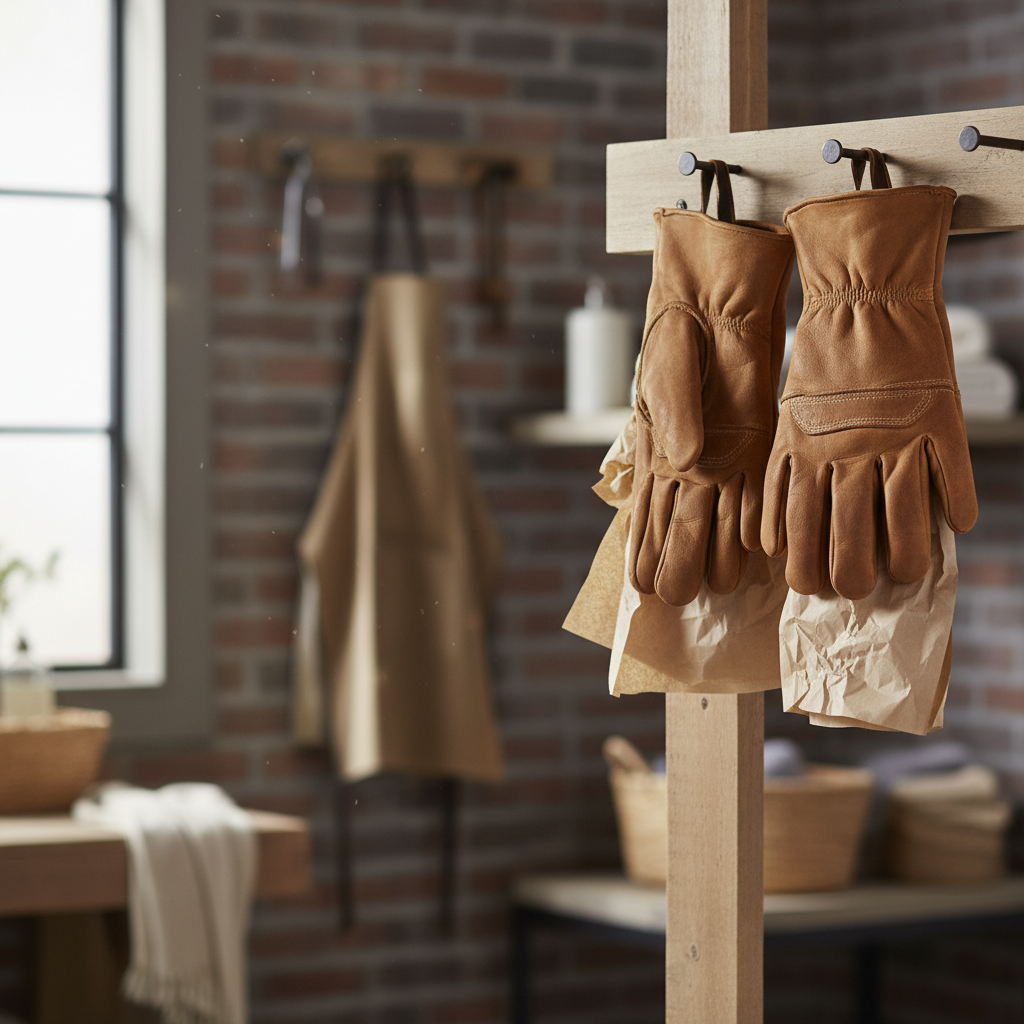
5) Air-dry slowly, reshape while damp
Pat with a dry towel, then let gloves dry at room temperature. Put them on briefly or stuff lightly with paper to hold shape. No heaters, no dryer vents.
If you’re trying to figure out how to clean leather work gloves easily without stiffness, this “less water, more wiping” idea is the whole trick.
Targeted fixes: grease, odor, salt stains, and heavy soil
Different messes call for different tactics. Here’s a quick table you can use without digging through forums.
| Problem | What usually works | What to avoid |
|---|---|---|
| Grease/oil spots | Blot, then cover with cornstarch/baking soda 4–12 hrs, brush off, repeat | Water-first scrubbing, strong degreasers |
| Sweat odor | Air out, baking soda in a bag overnight, wipe interior if unlined | Perfume sprays that mask odor |
| Salt stains (winter) | Wipe with barely damp cloth, repeat; condition after dry | Soaking, direct heat drying |
| Dried mud | Let it fully dry, brush off, then wipe | Washing while mud is wet |
| Paint/adhesive | Often better to let cure, peel carefully; test tiny spot if using remover | Unknown solvents that can dissolve finish |
Grease and oil: do the “absorb first” move
If a glove has fryer grease, chain lube, hydraulic fluid, or similar, don’t chase it with water. Blot, then apply cornstarch or baking soda, let it sit, brush off, and repeat. You’re pulling oil out rather than spreading it.
Odor: ventilation beats “more soap”
Odor usually comes from trapped moisture and bacteria on sweat, especially in lined gloves. Let gloves dry fully between uses, then deodorize. Baking soda in a sealed bag overnight often helps, but if the lining stays damp for days, odor returns fast.
Heavy soil: two light passes beat one aggressive wash
If gloves are truly filthy, do two gentle clean cycles on separate days, with full drying between. A single aggressive session tends to over-wet the leather and cause shrinkage.
Conditioning and drying: where most people either win or lose
Cleaning removes grime, but it also removes some natural oils. Conditioning puts a little of that “give” back. Over-conditioning can make gloves slippery and attract more dirt, so keep it light.
- When to condition: after gloves are dry to the touch, not while wet.
- How much: a small amount rubbed in thinly, you should not see greasy shine.
- Where: flex points, knuckles, palm crease, fingertips.
- Dry time: let them rest overnight if possible, then wipe off excess.
According to OSHA, PPE needs to be maintained in a sanitary and reliable condition, and replaced when it can’t provide adequate protection. In real life that means if your gloves depend on grip or cut resistance, cleaning shouldn’t compromise function.
Common mistakes that ruin leather gloves (and what to do instead)
- Mistake: soaking in a sink. Instead: wipe-clean method, controlled moisture.
- Mistake: drying on a heater or in a clothes dryer. Instead: room-temp air-dry, reshape while damp.
- Mistake: using harsh cleaners “because it’s work gear.” Instead: mild soap, spot cleaning, repeat if needed.
- Mistake: conditioning before gloves dry. Instead: fully dry first, then a thin coat.
- Mistake: cleaning to remove chemical contamination. Instead: treat as potentially unsafe, consider replacement, or consult a safety manager.
Practical tell: if gloves feel squeaky-clean and tight after drying, they were likely over-wet or over-cleaned, conditioning may help, but the fit change can be permanent.
When to replace gloves or ask for professional help
There’s a point where cleaning stops being smart. If gloves matter for safety, it’s worth being conservative.
- Replace if leather cracks deeply, seams split, fingertips wear through, or grip becomes unreliable.
- Replace if exposed to unknown chemicals, solvents, or pesticides, you may want guidance from a safety professional.
- Consider a pro if gloves are expensive specialty leather and you need restoration, a leather repair shop may help, though results vary.
If you’re unsure about contamination or safe handling, it’s reasonable to consult your employer’s EHS team or a qualified safety professional.
Conclusion: a simple routine you’ll actually repeat
If you want how to clean leather work gloves easily to be more than a one-time project, keep it boring: dry brush, damp wipe, mild soap only where needed, slow air-dry, then a light condition. Gloves stay softer, smell less, and you avoid the common “stiff and shrunken” outcome.
Two easy action steps: set a small brush and microfiber cloth near where you drop your gear, and do a 2-minute wipe-down before grime sets in, then condition lightly once gloves start feeling dry.
FAQ
Can I put leather work gloves in the washing machine?
In many cases it’s a bad trade, machines agitate and saturate, which can shrink leather and weaken shape. If the gloves are low-cost and already near end-of-life, some people try it, but expect stiffness and plan to replace if protection matters.
How do I clean the inside of lined leather work gloves?
Lined gloves are tricky because moisture gets trapped. Focus on drying and deodorizing: air out fully, use baking soda in a sealed bag overnight, and avoid soaking the lining. If odor persists, the lining may be holding sweat residue that’s hard to remove completely.
What soap is safe for leather gloves?
A small amount of mild, unscented dish soap often works for routine grime. Strong detergents and degreasers can strip oils. If you’re using a leather-specific cleaner, test a small area first because finishes vary.
How do I stop leather gloves from getting stiff after cleaning?
Use less water than you think you need, avoid heat drying, reshape while damp, and condition after drying. Stiffness usually comes from over-wetting plus fast drying.
How often should I condition leather work gloves?
It depends on use, climate, and how much you clean them. Many people do a light condition every few cleanings or when gloves start looking dull and feeling less flexible, too much conditioner can reduce grip.
How do I remove oil stains from leather work gloves?
Start by blotting, then use cornstarch or baking soda to absorb oil over several hours, brush off, repeat. It’s slower than scrubbing, but it usually avoids spreading the stain and over-saturating leather.
Is vinegar safe for cleaning leather gloves?
Diluted vinegar gets mentioned for odor or salt, but leather finishes react differently, and acids can be risky. If you try it, keep it very diluted, use minimal moisture, and test a small hidden spot first.
If you’re juggling daily wear, stubborn grime, and you just want a repeatable routine, it may help to pick one mild cleaner and one conditioner you trust, then treat cleaning like quick maintenance rather than an occasional deep wash.