
How to fix a hot glue gun not heating usually comes down to a short list: no power getting in, heat getting “stuck” at a bad connection, a safety part cutting the circuit, or the heater/nozzle area blocked so it never feels hot where you expect.
If you rely on a glue gun for crafts, packaging, props, or quick household repairs, a cold gun is more than annoying, it can turn a 5‑minute job into a full stop. The good news is many “dead” glue guns fail in predictable ways.
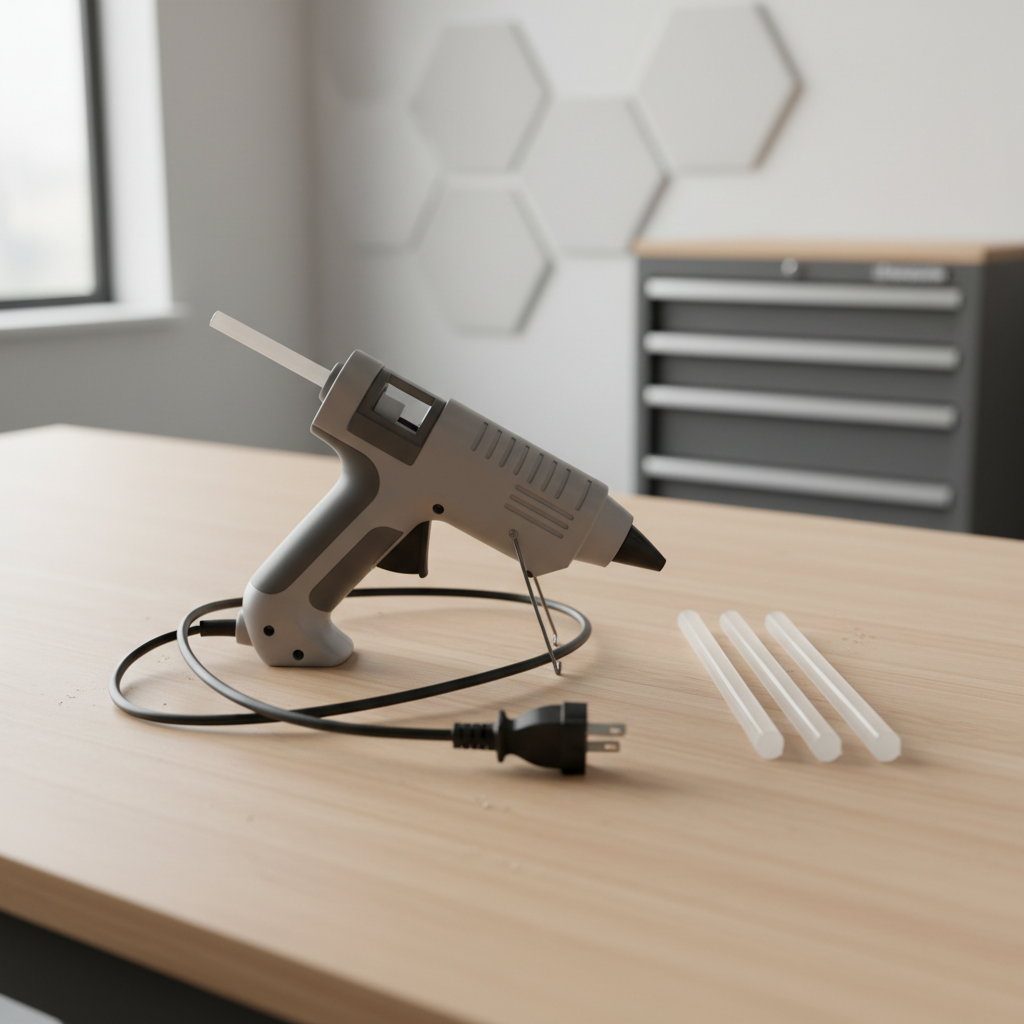
Before you buy a new one, work through the checks below in order. It’s faster than bouncing between random fixes, and it helps you avoid the one mistake that matters most: opening an appliance you shouldn’t.
Quick safety notes before you troubleshoot
Hot glue guns mix electricity and high heat, so treat this like a small appliance, not a toy. If anything smells like burning plastic, or the plug/cord feels hot, stop and unplug immediately.
- Unplug before touching the nozzle area, even if the gun “isn’t heating.” Some faults heat intermittently.
- Let the gun cool fully, then inspect with good lighting.
- If you need to open the housing, consider whether replacement is smarter, many low-cost guns are not designed for service.
According to CPSC (U.S. Consumer Product Safety Commission), damaged cords and overheating small appliances can present fire and burn hazards, so err on the cautious side when you see heat damage or exposed wiring.
Fast diagnosis: what the symptoms usually mean
This table helps you narrow the likely cause in under a minute, then you can jump to the matching section.
| What you notice | Most likely cause | What to do next |
|---|---|---|
| No indicator light, no warmth anywhere | No outlet power, bad cord/plug, failed switch | Check outlet, test another device, inspect cord/plug |
| Light on, but glue never melts | Heater element issue, thermal fuse open, bad internal connection | Try heat-up timing test, then decide: service vs replace |
| Gets slightly warm, then stops | Intermittent cord break, loose contact, overheating protection | Wiggle-test cord safely, inspect strain relief |
| Heats, but glue won’t flow | Nozzle clog, wrong glue stick size, partially melted plug | Clear nozzle carefully, confirm stick diameter |
| Burning smell, discoloration, smoke | Overheating, short, melted insulation | Unplug and replace; consider professional help |
Self-check checklist (start here)
If you’re searching how to fix a hot glue gun not heating, you’ll save time by running this quick checklist before attempting any “repair.” Most wins happen here.
- Outlet check: plug a lamp or phone charger into the same outlet.
- Power strip check: confirm the strip switch is on, and try a direct wall outlet.
- Heat-up time: many mini guns need 3–5 minutes, full-size models often 5–8.
- Correct glue stick size: mini (0.27") vs full size (0.44"). A mismatch can jam feeding and feel like “not heating.”
- Visual cord inspection: look for kinks, flattened spots, or cracking near the plug and strain relief.
- Indicator light reality check: some guns have a light that only confirms power, not actual heating.
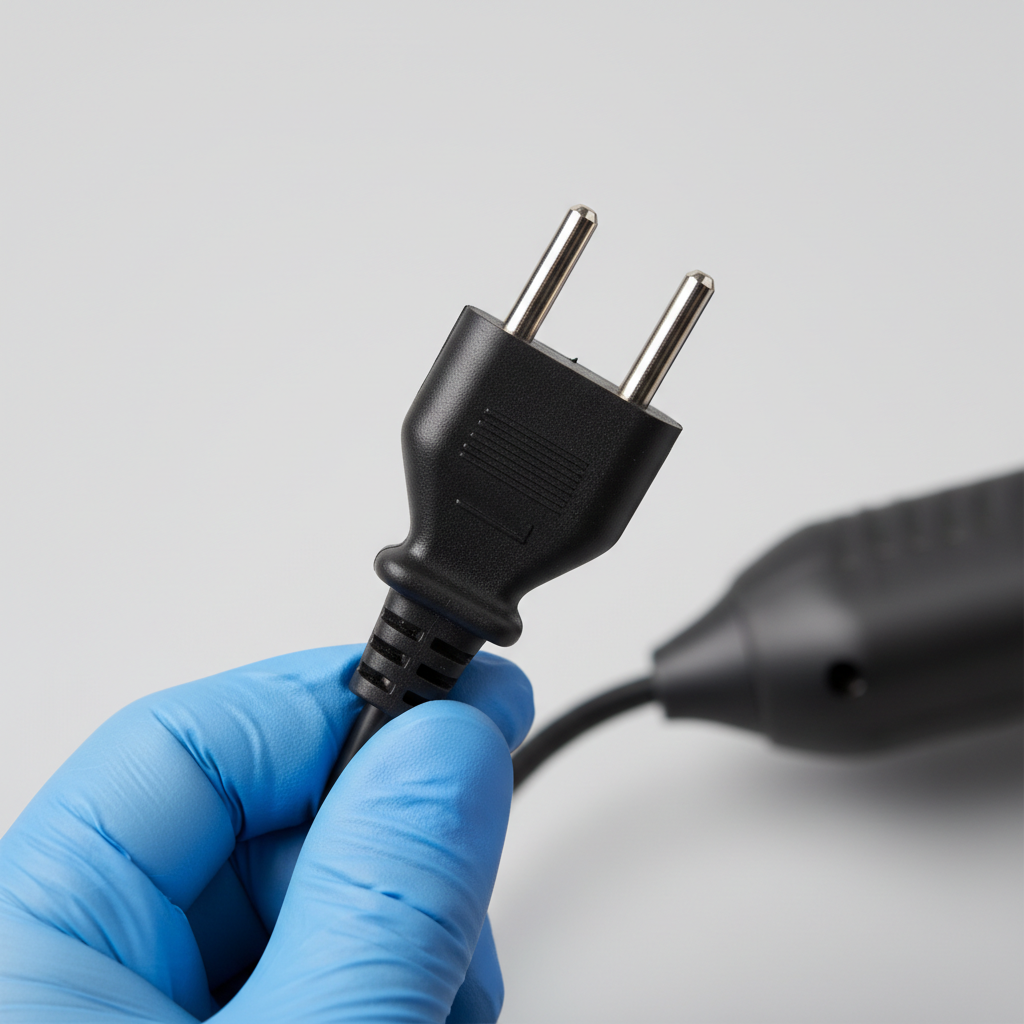
If you find cord damage, fraying, or exposed copper, replacement is usually the safer call than a DIY splice.
Fixes that don’t require opening the glue gun
1) Reset your setup: outlet, strip, and extension cord
It sounds basic, but “dead gun” reports often trace back to a tired power strip, a switched outlet, or an extension cord that drops voltage under load.
- Plug the gun into a known-good wall outlet.
- Avoid long, thin extension cords; if you must use one, choose a heavier gauge cord.
- If the plug feels loose in the outlet, try a different outlet.
2) Check the cord with a safe wiggle test
With the gun plugged in and sitting on a heat-safe surface, gently wiggle the cord near the strain relief only. If the indicator flickers or heating comes and goes, you likely have a broken conductor inside the insulation.
In many cases, that’s not worth repairing on a low-cost tool. Replacement is usually cheaper and safer than opening the handle and re-terminating wiring.
3) Clear a nozzle clog (when the gun heats but won’t dispense)
Sometimes the heater works, but old glue carbonizes in the nozzle, so you get pressure with no flow and assume the gun never got hot. Try this instead:
- Let the gun warm up fully.
- Insert a glue stick and squeeze the trigger steadily, don’t “pump” it fast.
- If glue still won’t move, unplug, then while warm (not scorching), use a wooden skewer to remove stringy buildup at the nozzle tip.
- For stubborn clogs, reheat and wipe the tip with a heat-resistant pad, keeping fingers away from metal.
Do not push metal needles deep into the nozzle; you can damage the liner or create a short if you reach internal parts on some designs.
4) Confirm you’re not fighting the wrong glue sticks
Wrong diameter sticks can slip, jam, or never reach the melt zone properly. If your trigger feels normal but the stick doesn’t advance, swap to the correct size and try again. Also watch for bargain sticks that vary in thickness, that variation alone can bind.
When the light is on but it still won’t heat: likely internal failure
If you’ve ruled out the outlet and the cord feels fine, the remaining causes typically sit inside: a failed heating element, a thermal fuse that opened, or a loose connection. This is the point where “how to fix a hot glue gun not heating” becomes a decision, not just a procedure.
- Heating element failure: the resistor/heater coil burns out, the gun powers but never builds temperature.
- Thermal fuse open: a one-time safety component cuts power if overheating occurs, after it opens, the gun stays cold.
- Loose internal spade/crimp: vibration or heat cycling can loosen a connector, creating intermittent heating.
For many consumer glue guns, parts are not readily available, and opening the housing can expose live terminals. If the gun is inexpensive, replacing it often makes more sense.
If you choose to open it: practical guidance (and boundaries)
Only do this if the gun is unplugged, cooled, and you’re comfortable working around small appliance wiring. If not, skip to the “When to get professional help or replace” section.
What to look for inside
- Burn marks or melted plastic near terminals or the heater block.
- Loose connectors on the switch or heater assembly.
- Thermal fuse often wrapped in heat-resistant sleeving near the heater block.
What you can reasonably fix
- Re-seat a connector that clearly slipped off, then reassemble carefully so wires don’t pinch.
- Tighten a screw terminal if your model uses one, without over-torquing.
What to avoid
- Bypassing a thermal fuse or safety cutoff, that can create a fire risk.
- Twisting wires together without proper connectors and insulation rated for heat.
- Operating the gun while open to “see if it heats,” that’s not a safe test.
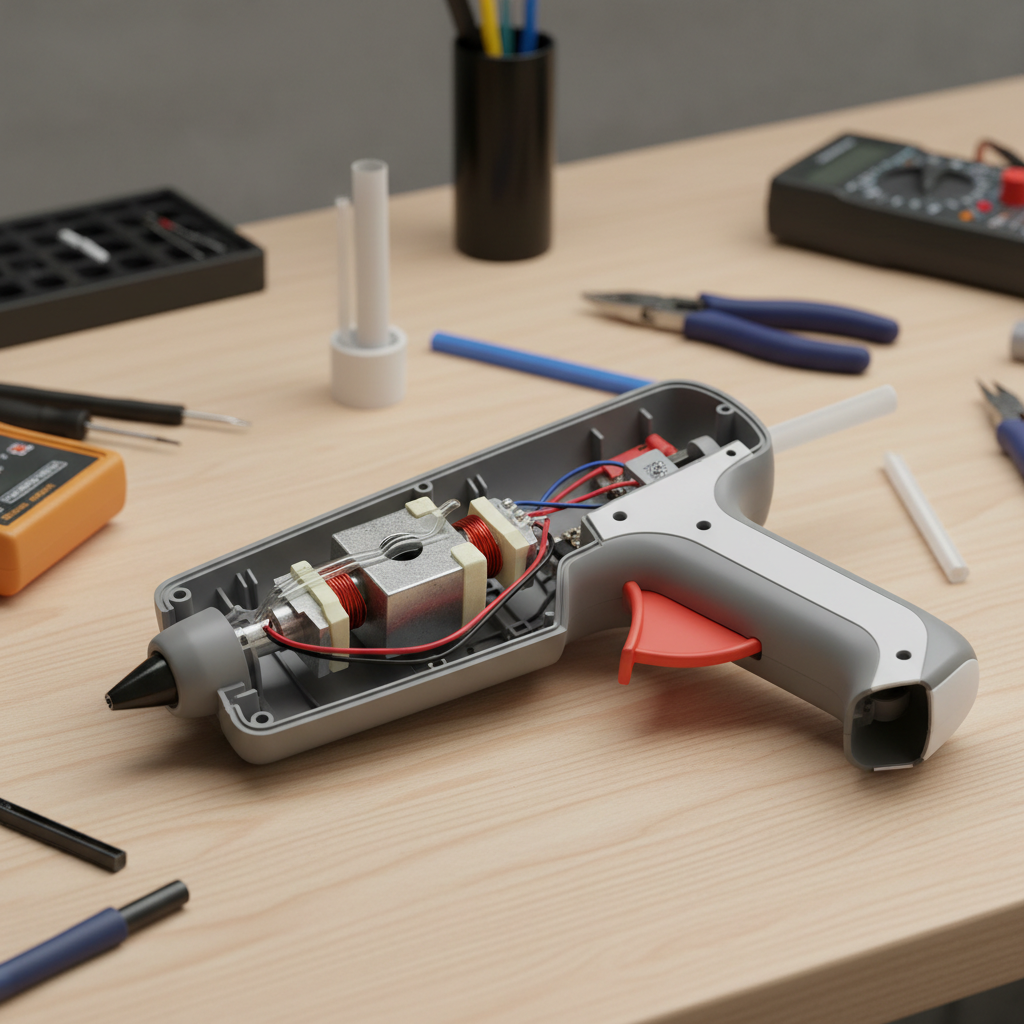
If you see charred insulation, brittle wires, or melted switch parts, replacement is the safer and usually faster solution.
Step-by-step: a realistic troubleshooting flow you can follow
Here’s a simple path that matches how the failures show up in real use, and it keeps you from spending effort on low-probability fixes.
- Step 1: Test outlet with another device, then try a different outlet.
- Step 2: Plug directly into the wall, skip power strips and extension cords.
- Step 3: Give it full heat-up time, then check for any warmth at the metal nozzle area.
- Step 4: If warm but no flow, address glue stick size and nozzle clog.
- Step 5: If no warmth and cord shows wear or heating is intermittent, replace the gun or cord assembly if manufacturer supports it.
- Step 6: If the light is on but it stays cold, decide whether opening it is worth it, many cases point to heater/thermal fuse failure.
Once you’ve reached Step 5 or 6, the “repair” often costs more time than the tool is worth unless it’s a pro-grade gun with service parts.
Common mistakes that waste time (or make it worse)
- Assuming the indicator light means heating, on many models it only means the gun has power.
- Using the wrong stick size, then forcing the trigger until the feed mechanism strips.
- Trying to clear clogs cold, hardened glue behaves like a plug and you can crack plastic parts.
- Leaving it plugged in “just in case”, if a thermostat sticks, overheating can happen.
- Bypassing safety parts to “get one more project done,” that tradeoff rarely ends well.
When to replace it or ask for professional help
If you’re still stuck on how to fix a hot glue gun not heating after the basic checks, the safest next step may be replacement. Consider stopping DIY troubleshooting if:
- You see smoke, melting, scorch marks, or smell burning.
- The cord or plug gets hot to the touch.
- The gun trips a breaker or GFCI outlet.
- It’s a higher-end gun used in a business setting, and downtime matters, in that case, contacting the manufacturer or a qualified repair shop can be worth it.
According to NFPA (National Fire Protection Association), small electrical faults and overheated equipment can contribute to fire risk, so when a tool shows clear heat damage, replacing it is often the responsible choice.
Key takeaways and next steps
Key points: check power first, then cord health, then glue flow issues, and only then consider internal faults. Most quick wins come from outlet/strip problems, cord breaks near the handle, or a clogged nozzle that makes the gun feel “dead.”
If you want a practical next step, do this: plug into a known-good wall outlet, wait 5–8 minutes, then test glue flow with the correct stick size. If there’s still no warmth at the nozzle and the cord looks questionable, replace the tool rather than forcing a risky repair.
FAQ
Why is my hot glue gun not heating but the light is on?
The light often indicates power, not temperature. If the nozzle stays cold after a full warm-up, common causes include a failed heater, an open thermal fuse, or an internal connection issue.
How long should a hot glue gun take to heat up?
Many mini guns need around 3–5 minutes, and larger models often need 5–8 minutes. Colder rooms and thicker glue sticks can make it feel slower, but it still should show noticeable warmth at the nozzle.
Can I fix a hot glue gun not heating by changing the fuse?
Some models include a thermal fuse that is not user-serviceable. Replacing it can be possible on certain designs, but it involves opening the housing and using proper heat-rated parts, if you’re unsure, replacement or a qualified technician is safer.
What if my glue gun heats up but no glue comes out?
That’s often a clog or a glue stick mismatch. Confirm stick diameter, allow full heat-up, then clear buildup at the tip carefully while avoiding burns.
Is it safe to leave a glue gun plugged in all day?
Many craft guns are not designed for continuous unattended operation. If you need long sessions, use a stand, keep it on a heat-safe surface, and unplug during breaks when practical.
Why does my glue gun heat intermittently?
Intermittent heating often points to a cord break near the strain relief or a loose internal connector. If a gentle wiggle test changes behavior, replacement is usually the safer route.
Should I buy a new glue gun or try to repair it?
If it’s a low-cost model with cord damage, burning smell, or no heat despite having power, replacement is typically more sensible. For pro-grade tools, manufacturer support or repair can be worth exploring.
If you’re trying to keep projects moving and you’d rather not guess, consider keeping a simple troubleshooting checklist printed near your craft station, and if you replace the gun, pick a model with a stable stand, a clear power indicator, and readily available glue sticks in the right size for your work.