
How to cut small holes with keyhole saw is mostly about control: a clean start, a stable grip, and letting the teeth do the work instead of forcing the blade.
If your cutouts keep wandering, tearing paper on drywall, or leaving a ragged edge on plywood, it usually comes down to two things, the wrong blade for the material, or a start hole that makes the saw “skate” before it bites.
This guide walks through a practical setup, a few reliable ways to start the cut, and the small habits that make holes look intentional, even when you’re working in a tight spot like behind a sink or inside a cabinet.
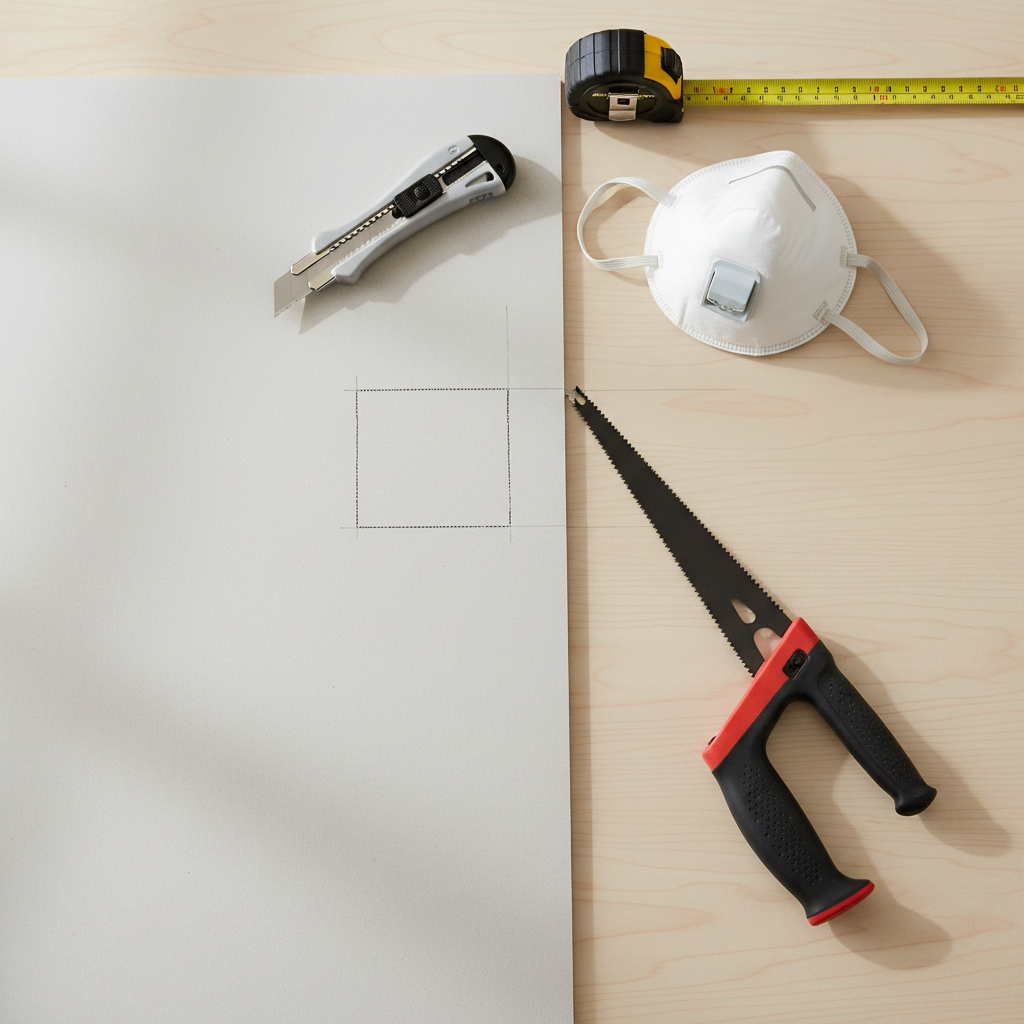
When a keyhole saw is the right tool (and when it isn’t)
A keyhole saw shines when you need a small cutout and you can’t fit a larger tool, or you want more “feel” than a power tool gives. Think drywall access holes, old-work electrical boxes, plumbing escutcheon openings, or trimming thin paneling.
But it’s not always the best pick. If you need a perfectly round hole for pipe or a recessed light, a hole saw or drywall circle cutter usually gives cleaner geometry with less effort. If you’re doing dozens of cutouts, an oscillating multi-tool often saves time, though it creates more dust and can be easier to overcut.
- Great use cases: drywall cutouts, small rectangles, notches, close-quarters trimming
- Sometimes better alternatives: hole saw (round), jigsaw (longer cuts), oscillating tool (repeat cutouts)
Pick the right keyhole saw blade for drywall vs. wood
Many people grab whatever “jab saw” is on hand, then wonder why the edge crumbles or the blade binds. Tooth shape and spacing matter more than you’d expect.
Quick selection table
| Material | Typical blade style | What you want | Common problem |
|---|---|---|---|
| Drywall | Rasp-style or coarse drywall keyhole saw | Fast bite, low effort | Tearing paper if you yank or twist |
| Softwood / plywood (thin) | Fine-tooth keyhole saw | Smoother edge, less splinter | Binding if the kerf closes |
| Hardwood / laminate | Fine tooth, sharp point; sometimes better with oscillating tool | Controlled cut, minimal chipping | Chipping on the face veneer |
If you’re unsure, use coarse teeth for drywall, finer teeth for wood, and avoid forcing a drywall saw through plywood unless you’re okay with rough edges.
Layout and “no regrets” prep before you cut
Small holes look clean when the prep is clean. The saw work is only half the story.
- Mark your cut lines darker than you think. In dim corners, faint pencil lines disappear fast.
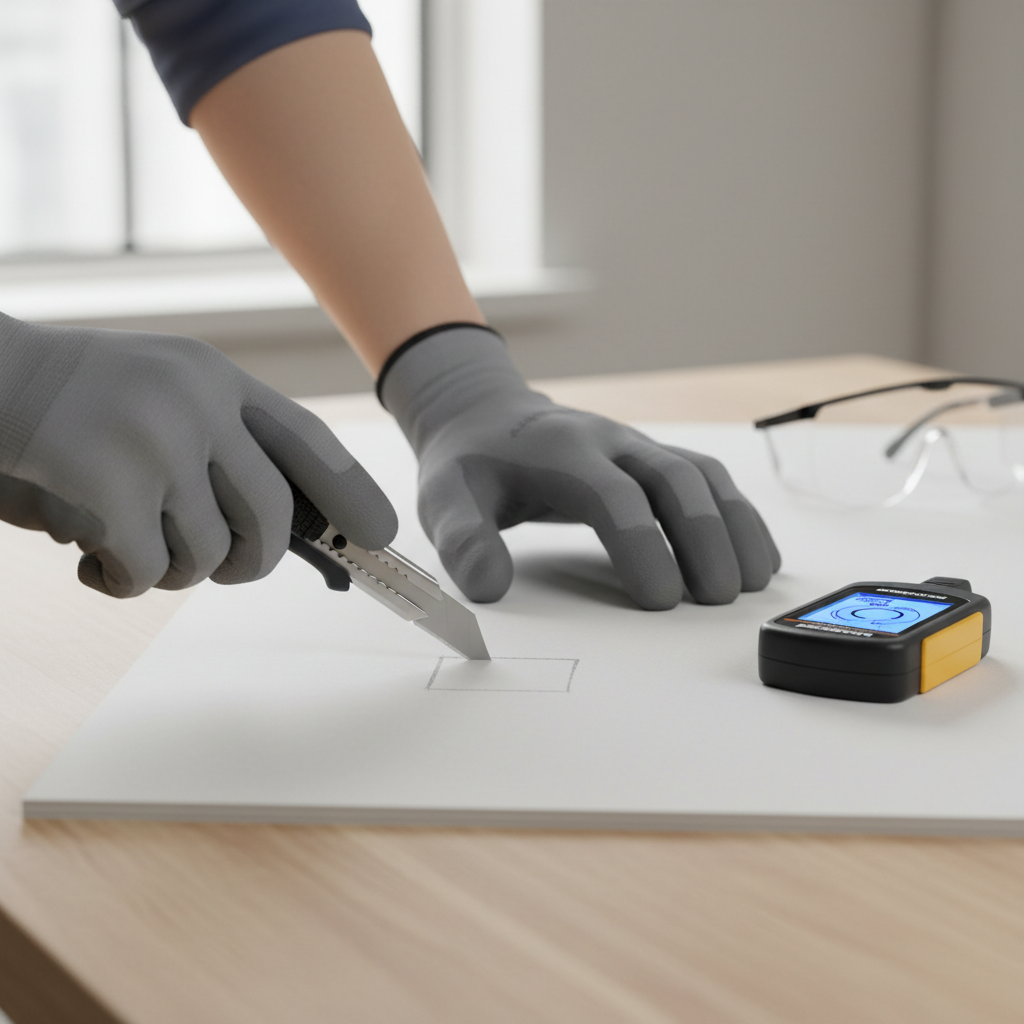
- Score the face on drywall. Lightly cut the paper along your outline with a utility knife to reduce tearing.
- Tape the cut line on plywood veneer. Painter’s tape can reduce splintering at the surface.
- Confirm what’s behind the surface. Especially for walls: wiring, plumbing, ducting, and studs can sit close to your target.
According to OSHA, you should evaluate work areas for hidden hazards and use appropriate PPE when cutting or drilling materials. In real life, that usually means at least eye protection, and often a dust mask for drywall.
How to start the hole cleanly (three reliable methods)
The start is where most cutouts go sideways. If the saw tip skates, the hole grows in the wrong direction, and you end up “correcting” with extra damage.
Method A: Drill a starter hole (most controlled)
Drill a hole just inside your waste area, then insert the saw blade. This is the easiest way to keep corners tight.
- Use a 3/8 in. to 1/2 in. bit for most keyhole saw blades
- Keep the drill perpendicular to avoid an angled entry
- Start cutting with short strokes until a kerf forms
Method B: “Jab start” for drywall (fast, but needs touch)
For drywall, you can push the point through the board. Angle the saw slightly, poke through, then level out and start sawing. The key is gentle pressure so the paper doesn’t blow out.
Method C: Knife starter slit (good for delicate surfaces)
On thin paneling or where chipping matters, make a small slit with a utility knife or chisel inside the waste area, then slide the saw tip in and begin.
Cutting technique that keeps small holes accurate
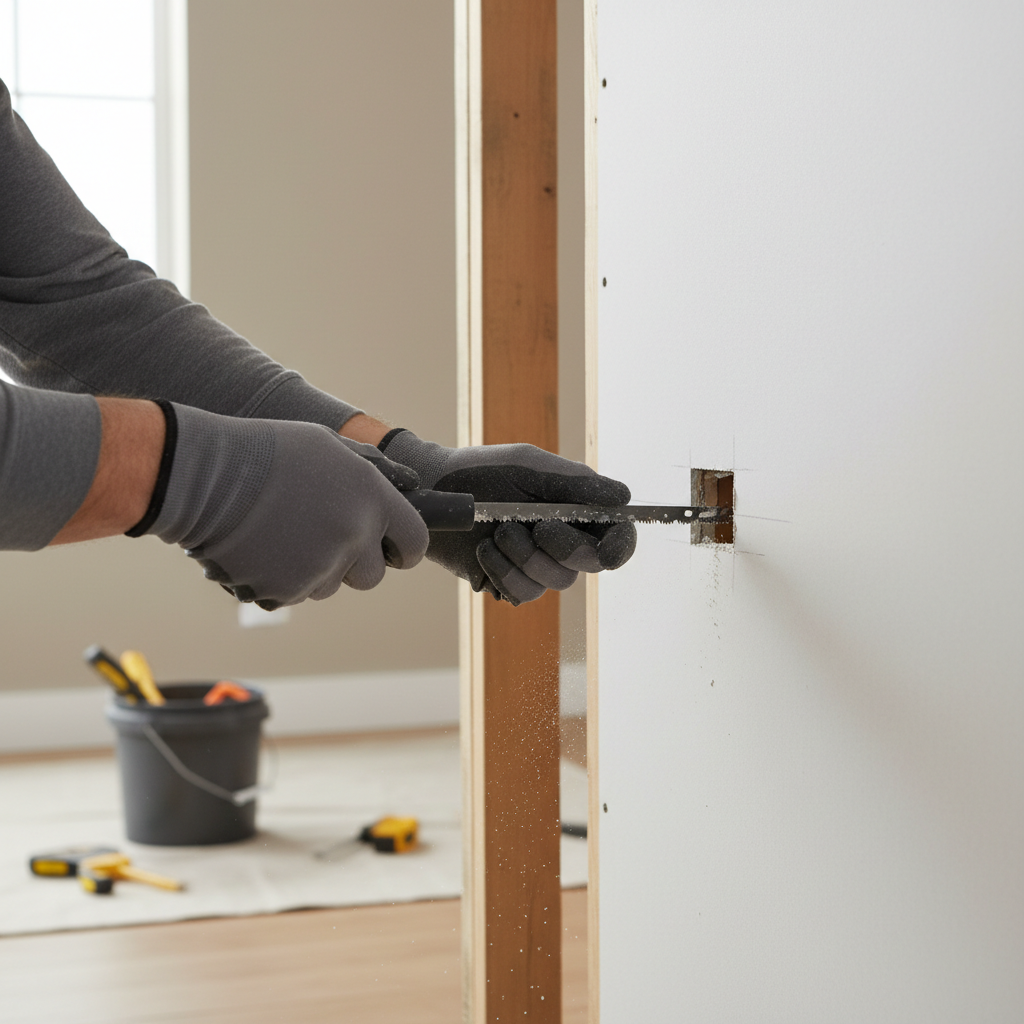
How to cut small holes with keyhole saw without overcutting usually comes down to pace, angle, and how you treat corners.
- Use shorter strokes early. Long strokes before the kerf forms invite wandering.
- Let the saw stay plumb. If you lean the handle, the blade flexes and your line drifts.
- Turn corners by backing up. Stop short, pull back a bit, rotate the blade, then re-enter the kerf.
- Support the cutout. When the piece starts to break free, hold it so it doesn’t tear the last edge.
On drywall, a common “clean edge” move is scoring the outline, then sawing just shy of the line and finishing to the line with a few controlled strokes.
Self-check: are you using the right approach for your situation?
If your cutouts keep coming out rough, run this quick checklist before you blame your hands.
- My blade matches the material, drywall vs. wood
- I can see the line clearly in the actual lighting where I’m cutting
- I have a starter hole or a scored face to prevent tear-out
- I’m not forcing the saw when it binds
- I’m controlling corners instead of “twisting through” them
If you checked most boxes and it still looks messy, the material may be brittle, the blade may be dull, or the opening may be better handled with a different tool.
Common mistakes (and the small fixes that actually help)
A lot of “bad cuts” are one habit repeated, not a lack of skill.
- Pushing too hard: back off pressure, increase stroke count, and clear dust from the kerf.
- Cutting past corners: drill small corner holes as stop points, or slow down two inches before the turn.
- Tearing drywall paper: score first, reduce jab force, and stop yanking the waste piece out.
- Splintering plywood: tape the cut line, cut from the “good face” when possible, use a finer blade.
- Binding in wood: wiggle slightly to open the kerf, or insert a thin shim behind the blade if you can.
Key takeaway: clean cutouts come from a controlled start and patient corner work, not speed.
Safety notes and when to call a pro
Cutting small openings looks simple, but walls and cabinets hide surprises. If you suspect wiring or plumbing near your cut line, it’s worth slowing down and confirming before you commit.
- Wear eye protection, drywall dust and wood chips travel fast
- Use a dust mask for drywall, exposure can irritate airways for some people
- Cut shallow at first if you’re unsure what’s behind the surface
If the opening relates to electrical work, gas lines, or structural framing, consulting a licensed professional is often the safer route, and may be required by local code.
Wrap-up: a clean small hole is mostly a clean start
How to cut small holes with keyhole saw gets much easier when you treat the first minute as the “precision” part, then let the rest be steady, boring sawing. Pick the right blade, create a starter hole or score line, then slow down at corners and you’ll usually end up with a cutout that needs minimal cleanup.
If you’re doing your next cutout today, try this: mark clearly, score the face, drill a starter hole, and commit to short strokes for the first few passes. That small change tends to fix most wandering cuts.
FAQ
Can I cut a small hole in drywall without drilling a starter hole?
Yes, many drywall keyhole saws are designed for a jab start, but it’s easier to tear the paper if you push too aggressively. If appearance matters, scoring the outline often helps.
What’s the best way to cut a small rectangular hole for an outlet box?
Mark the box carefully, score the face paper, then use a drill starter hole inside one corner. Saw to your lines and treat corners like stop points, not something to muscle through.
Why does my keyhole saw keep bending or drifting off the line?
Usually the blade is flexing from side pressure. Keep the saw more vertical, reduce force, and use shorter strokes until the kerf guides the blade.
How do I avoid splintering when using a keyhole saw on plywood?
Painter’s tape over the cut line and a finer-tooth blade can reduce tear-out. Cutting from the finished face also helps, though access isn’t always possible.
Can a keyhole saw cut through lath and plaster?
Sometimes, but it can be slow and messy, and old plaster can crack beyond your line. Many people switch to an oscillating tool with the right blade, and go carefully to limit damage.
How do I make the edge look cleaner after the cut?
On drywall, a utility knife can trim fuzzy paper edges, then light sanding helps. On wood, a sanding block or file usually evens small bumps without enlarging the hole too much.
Is it safe to cut into a wall if I don’t know what’s behind it?
It can be risky. If you can’t confirm there’s no wiring or plumbing, start with a very shallow exploratory cut, or use an inspection camera, and consider bringing in a professional for sensitive areas.
Key points to remember
- Start clean: drill a starter hole or score the face to prevent tear-out.
- Match blade to material: coarse for drywall, finer for wood.
- Corner control matters: stop, back up, rotate, then continue.
- Don’t force it: pressure causes drift, binding, and blowout.
If you’re cutting several openings and want more predictable edges, it may be worth comparing a keyhole saw approach with an oscillating tool or a hole saw, depending on the shape you need.