
Air nozzle extension long attachments solve a simple problem: you can reach deep, awkward spaces without cramming your hands, tools, or an entire blow gun into the area.
If you dust computers, shop equipment, HVAC vents, car interiors, or production lines, reach and control matter more than raw air pressure. A long extension can keep you back from the mess, direct airflow where it belongs, and reduce the “dust cloud” effect that happens when you blast from too close.
That said, not every “long” nozzle fits every compressor setup, and using the wrong length or tip style can make dusting slower, louder, and sometimes riskier around delicate parts. This guide walks through what to look for, how to match length to the job, and how to use a long extension without turning your workspace into a snow globe of debris.
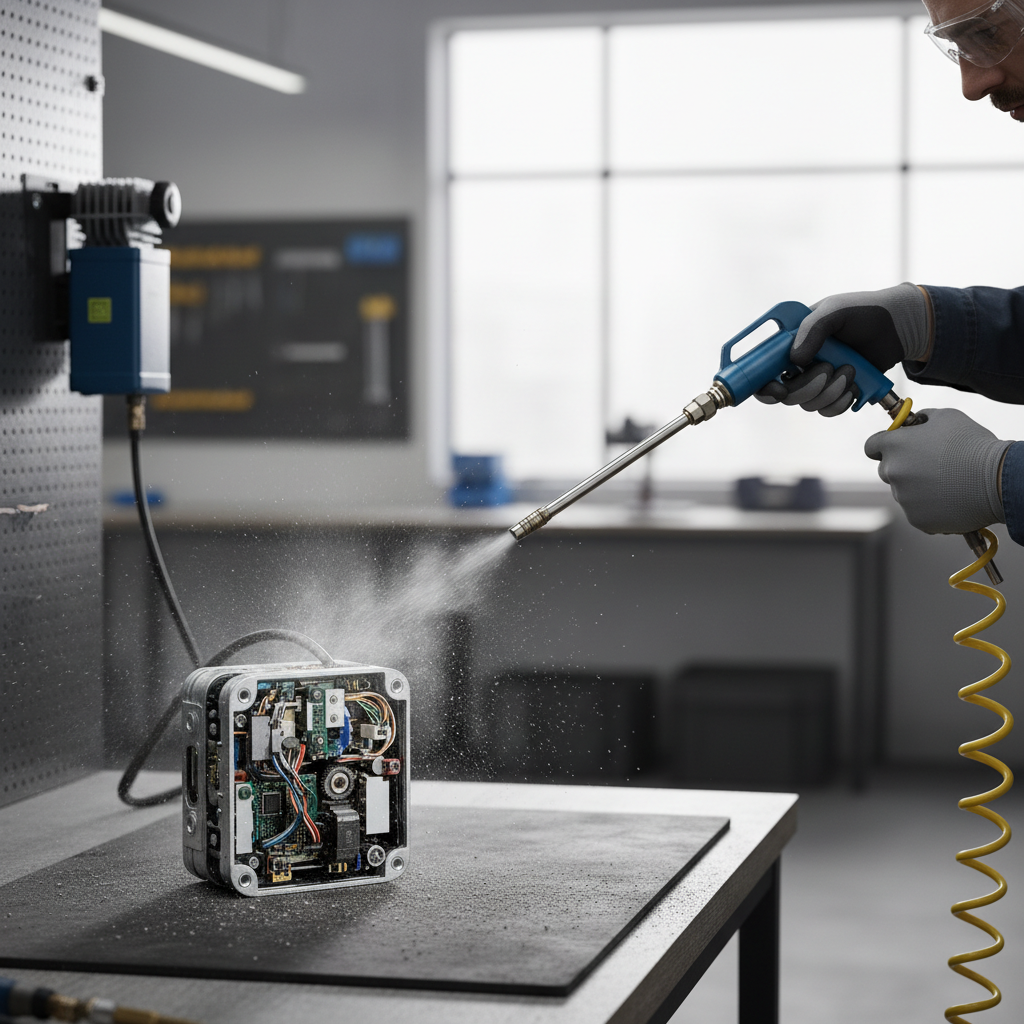
Why a long extension helps (and when it backfires)
The big win is access. With a longer reach, you can aim into vents, behind motors, under seats, or along ledges without changing your body position every 10 seconds.
The second win is consistency. Many people dust “too close,” which tends to scatter debris in all directions. Stepping back and using a longer tube often makes airflow more directional, especially if you pair it with a sensible tip.
But there are trade-offs. Longer extensions can reduce effective airflow at the tip and may amplify vibration or “whip” if the hose pulls. And if you’re dusting electronics, bearings, or finished surfaces, the wrong technique can push debris into places you don’t want it.
- Works great for: vents, grilles, cabinets, engine bays, shop corners, machinery frames, general dry dust.
- Be cautious with: open circuit boards, precision optics, freshly painted surfaces, loose insulation, and areas with unknown contaminants.
Quick self-check: do you actually need an air nozzle extension long?
Before buying anything, check whether reach is the real issue or if you need better filtration or containment.
- You’re constantly removing guards/panels just to access dust.
- You can’t keep the nozzle angle steady because the space is cramped.
- You’re getting blowback in your face even with decent positioning.
- You need to dust “in place” without moving equipment (racks, conveyors, built-ins).
- You’re trying to dust while keeping distance from sharp/hot parts.
If your main complaint is “dust goes everywhere,” a longer extension helps, but pairing it with a vacuum, dust hood, or better airflow strategy often helps more than adding length alone.
Choosing the right length, tip style, and connection
Most buying mistakes come from picking length first and ignoring tip geometry and fit. A long tube with a poor tip still behaves like a leaf blower in a closet.
Length: match the reach to your typical spaces
- 6–12 inches: cabinets, small machines, bench work where control matters.
- 12–24 inches: vehicle interiors, HVAC registers, deeper housings.
- 24+ inches: hard-to-reach industrial equipment, overhead ducting, behind large assemblies.
In many shops, “medium long” gets used daily, while extra-long becomes a niche tool. If you’re unsure, start mid-length and add longer later.
Tip style: the part that decides control
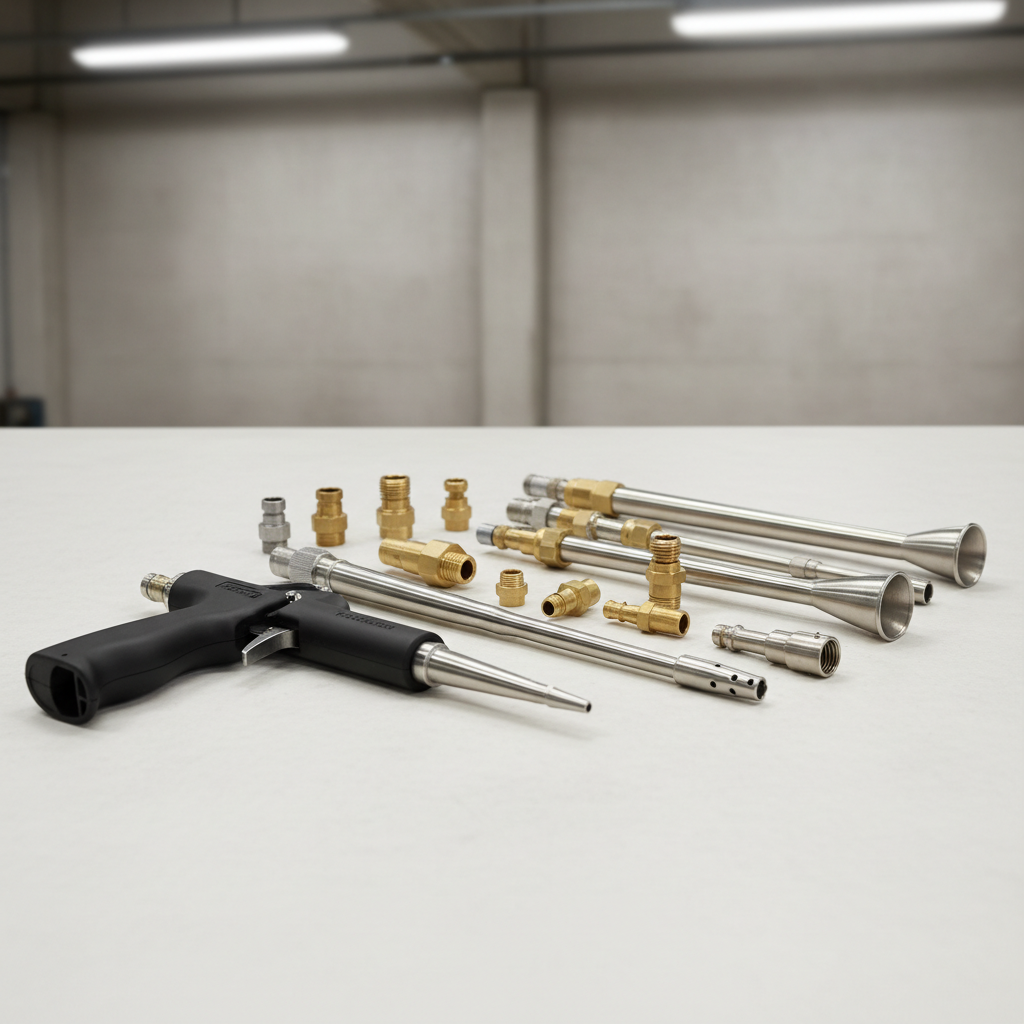
- Standard tapered tip: general dusting, good balance of reach and aim.
- Safety tip / relief ports: reduces dead-end pressure if the tip is blocked, often better for general workplace safety.
- Venturi / high-thrust tips: can move more air but may stir more dust and be louder.
- Needle / pinpoint: for crevices, but easy to overdo near delicate parts.
Connection and compatibility
Confirm the thread type, coupler style, and whether the extension is rigid or semi-flexible. A rigid extension is more precise; a semi-flex option can be easier around obstructions but may wobble. Also, check if your blow gun has enough leverage and comfort for longer attachments, your wrist will notice.
Comparison table: what to buy based on your dusting job
This table isn’t a “one-size-fits-all,” but it does reflect how these setups usually behave in real use.
| Use case | Suggested extension | Tip style | Why it works |
|---|---|---|---|
| Shop machines & frames | 12–24 in rigid | Standard tapered or safety | Good reach without losing aim |
| Vehicle interior crevices | 12–18 in semi-flex | Pinpoint or tapered | Angles around seats, tracks |
| HVAC vents & registers | 18–36 in rigid | Safety tip | Distance helps reduce blowback |
| Electronics enclosures | 6–12 in rigid | Safety tip, wider pattern | More control, less “needle blast” |
| Deep industrial equipment | 24+ in rigid | Tapered or venturi (careful) | Reach into bays without disassembly |
How to dust with a long extension without making a bigger mess
Air dusting is mostly about where the dust goes next. The goal is “controlled relocation,” not random dispersal.
A practical step-by-step routine
- Pick an exit path: aim dust toward an open doorway, a catch area, or a vacuum intake, not deeper into a device.
- Start farther back: use the extra reach to keep distance, then move in only if needed.
- Use short bursts: bursts tend to move dust without overheating the job or blasting debris into seals.
- Work top to bottom: you’ll redo less work because gravity stays on your side.
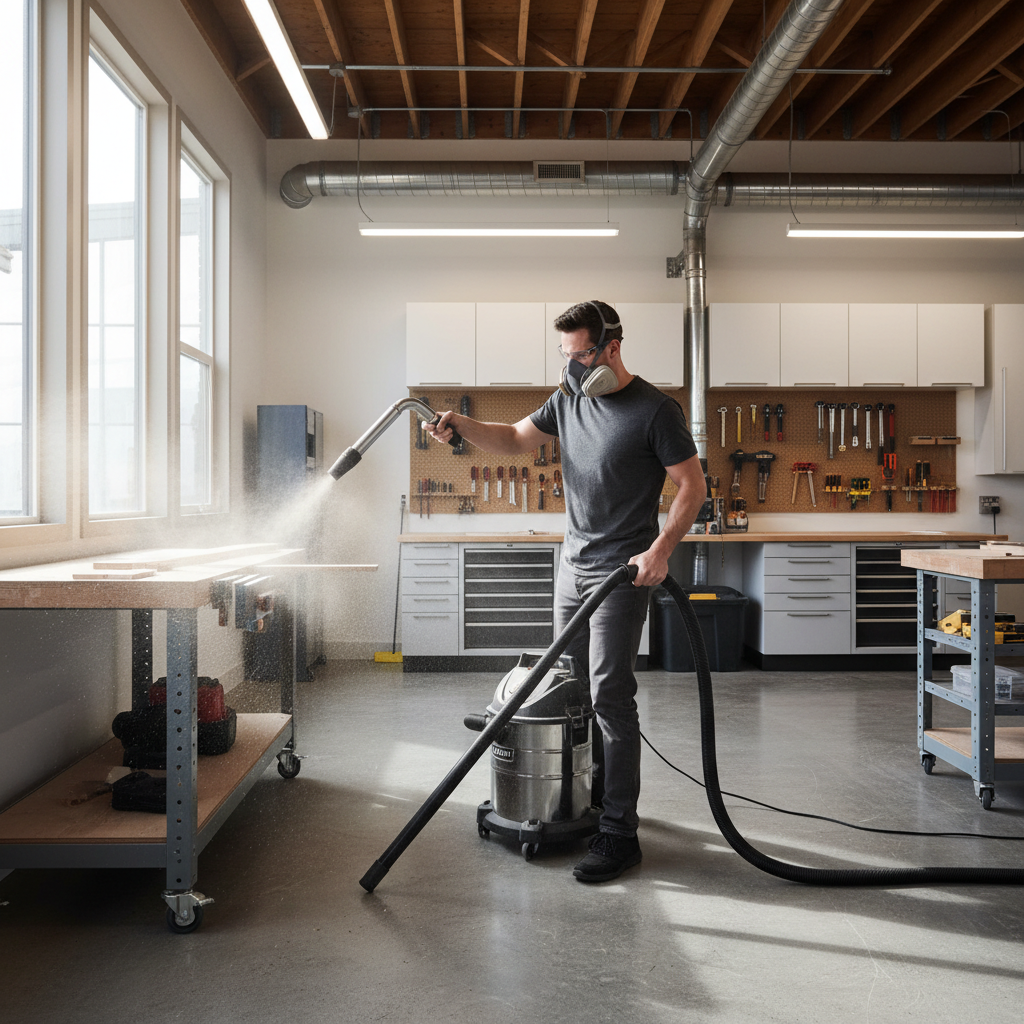
- Pair with capture: a shop vac held nearby often beats “more air,” especially indoors.
Key points people skip
- Regulate pressure at the tool, not just the compressor. That’s where control lives.
- Keep the hose relaxed. A tense hose makes a long extension feel twitchy.
- Angle matters. A shallow angle often lifts dust without driving it into cracks.
Safety and common mistakes (especially indoors)
Compressed air can be more hazardous than it looks, mainly because debris becomes airborne and small particles can end up where you don’t want them. According to OSHA, compressed air used for cleaning should be reduced to safe levels and used with effective chip guarding and PPE to reduce risk.
In practice, the most common “why did this go wrong” moments come from overpressure, poor aiming, and dust that should not be aerosolized.
- Mistake: blasting directly into bearings or seals. Better: dust around them, wipe or vacuum the rest.
- Mistake: using a needle tip on delicate fins or boards. Better: wider tip, lower pressure, more distance.
- Mistake: dusting without eye protection. Better: safety glasses as a baseline; add a face shield when debris is heavy.
- Mistake: blowing unknown dust indoors. Better: consider local exhaust, wet methods, or consult your safety lead if material is uncertain.
If you work around silica, lead paint residue, fiberglass, or other regulated hazards, airborne cleaning may be inappropriate. This varies by workplace and material, and it’s worth checking your safety guidance.
When to consider a different tool (or get professional input)
A long extension is a tool, not a cleaning plan. If any of the situations below sound familiar, switching approaches usually saves time.
- Recurring heavy buildup: you may need better filtration, seals, or housekeeping schedule rather than more air.
- Sensitive equipment: electronics, medical devices, optics, and calibrated sensors may need manufacturer-approved cleaning methods.
- Unknown contaminants: if dust could be hazardous, talk to your EHS team or a qualified professional before aerosolizing it.
And if your compressor setup feels underpowered with longer attachments, a technician can help you check regulator settings, line losses, and whether your blow gun and couplers are restricting flow.
Conclusion: a long extension is about control, not just reach
Air nozzle extension long options can make dusting calmer and more precise, especially when you choose a sensible length and a tip that matches the surface. Think in terms of direction, distance, and capture, and you’ll spend less time re-cleaning the same area.
Action ideas: pick one “daily-driver” length for your most common jobs, then tune pressure and tip style before buying a second extension. If dust is a recurring indoor problem, add vacuum capture and basic containment instead of relying on airflow alone.
FAQ
What length is best for an air nozzle extension long used for dusting?
For most general dusting, 12–24 inches tends to balance reach and control. Extra-long tubes help in deep housings, but they can feel less precise if your hose pulls or your blow gun is light.
Does a longer extension reduce air power at the tip?
Often, yes. Added length and fittings can create pressure drop and turbulence, so you may feel less “bite” at the tip. In many cases, better tip selection and pressure regulation matters more than chasing maximum length.
Is it safe to use compressed air to clean a computer or electronics?
It depends on what you mean by “electronics” and how you use it. Lower pressure, more distance, and a wider/safety tip can reduce risk, but some devices still call for vacuuming or manufacturer-approved methods.
Should I choose a rigid or flexible extension?
Rigid extensions aim more accurately, so they’re usually better for controlled dusting. Flexible options help when you must bend around obstacles, but they can wobble and make it easier to accidentally hit parts.
What’s the difference between a safety tip and a regular tip?
A safety tip typically has relief ports that reduce dead-end pressure if the tip is blocked. It’s a practical choice in shared shops where you want a more forgiving setup.
Why does dust blow back into my face even with a long nozzle?
Usually it’s the airflow path, not the nozzle. Try changing the angle so dust exits the space instead of bouncing off a back wall, and consider pairing air with a vacuum intake nearby.
Can I use an extension to clean HVAC vents at home?
You can, but indoor dust becomes airborne fast. Eye protection helps, and it’s smart to dust toward a capture method or outside airflow. If you suspect mold or hazardous debris, consider professional guidance.
If you’re trying to standardize a dusting setup for a shop or maintenance team, or you want a more reliable way to reach tight spaces without overblowing everything around it, choosing the right extension length, tip, and pressure control as a set usually delivers the “cleaner with less drama” result people expect.