
Hand nibbler metal cutter is one of the easiest ways to make controlled cuts in thin sheet metal, but getting truly straight lines can feel oddly tricky, even when your layout looks perfect.
If your cut keeps drifting, the tool binds, or the edge looks like a zipper, it usually comes down to a few fixable things: metal thickness, how you support the work, and the way you “feed” the nibbler through the line. Small adjustments make a big difference, and you do not need a full shop setup to see improvement.
This guide focuses on straight-line results, not marketing claims. You will see what a hand nibbler does well, where it struggles, how to diagnose your issue quickly, and a repeatable technique that keeps your cut on track.
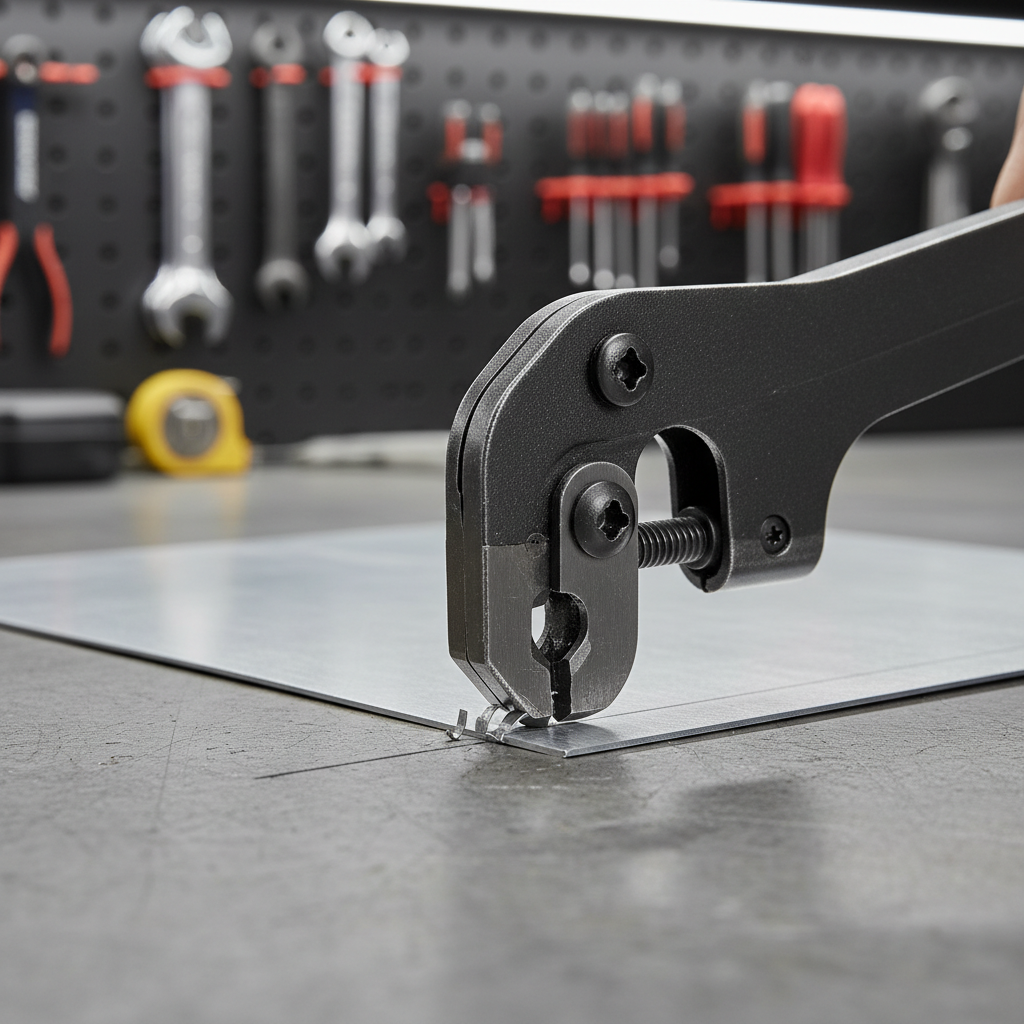
What a hand nibbler is good at (and where straight cuts get harder)
A hand nibbler punches out small “bites” of metal as you squeeze the handle. That bite size gives control in tight spaces, but it also creates a natural tendency to steer, especially if the metal flexes or you rush the feed.
In many DIY and light-duty jobs, a hand nibbler metal cutter shines when you need clean cuts without sparks, minimal setup, and access where powered shears do not fit.
- Best at: thin sheet metal, HVAC duct work, appliance panels, light aluminum, quick access cuts.
- Usually tougher for: long straight runs on large floppy sheets, harder steels, thick gauge where the punch strains.
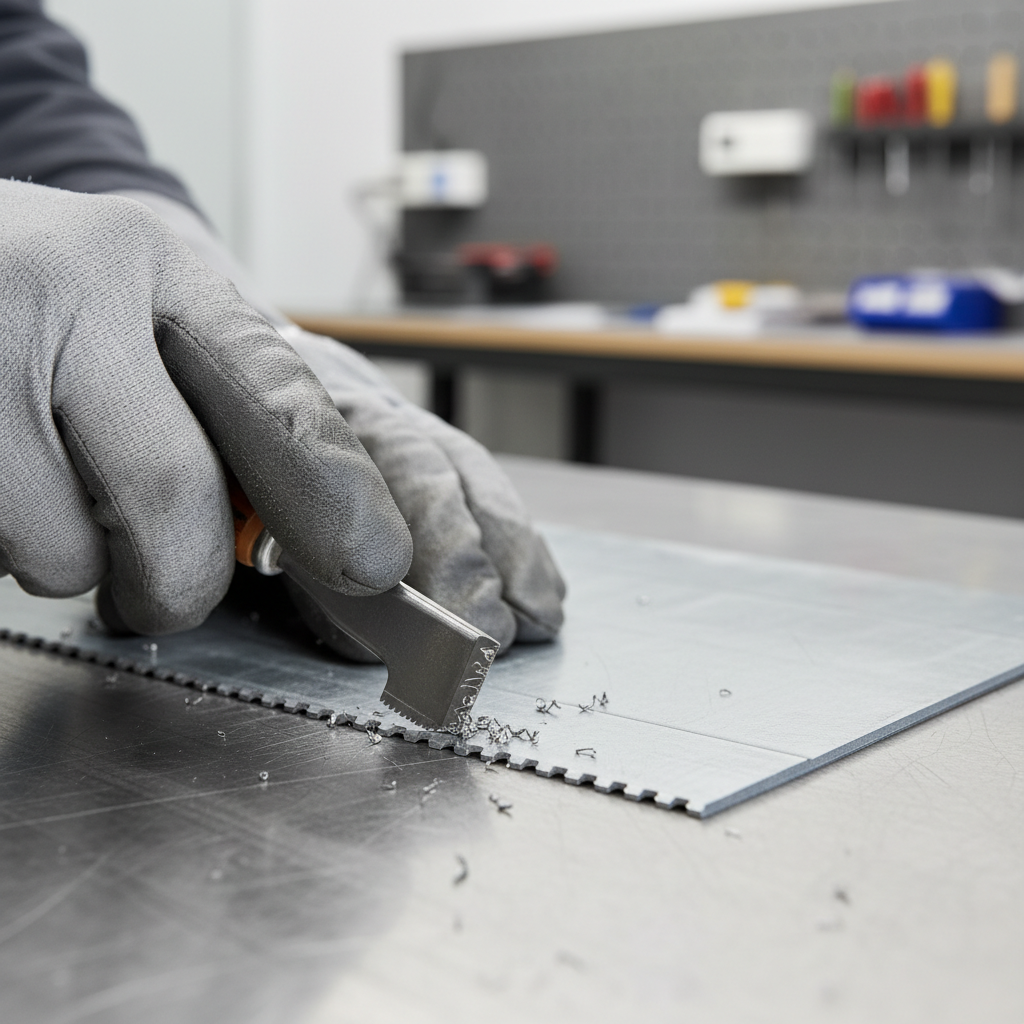
- Edge result: typically a scalloped edge that can be filed smooth, not a perfect “saw-cut” look.
According to OSHA, hand tool safety starts with using the correct tool for the material and keeping hands clear of pinch and cut points, which matters here because nibblers create sharp chips and edges.
Why your straight line turns into a curve: the real causes
When a cut drifts, most people blame their hands. More often, the metal and setup push the tool off line.
1) The sheet flexes and “walks” away from the punch
If the work is unsupported, the punch meets changing resistance every squeeze, so the head naturally angles toward the path of least resistance.
2) You are trying to correct too late
Nibblers cut in small steps. If you wait until you are clearly off the line, you end up over-steering, which creates a wave pattern.
3) The tool is not square to the sheet
A slight tilt makes the punch bite unevenly. That uneven bite pulls you sideways, especially on longer runs.
4) Material is too thick or too hard for your nibbler
When squeezing gets difficult, you compensate by twisting your wrist or levering the tool, and that twist becomes drift. Many hand nibblers are intended for thinner gauges, and limits vary by brand and metal type.
5) Dull punch/die or misalignment
A worn cutting head can start tearing instead of punching cleanly, which increases friction and makes the tool feel like it “grabs.” If your cut quality suddenly worsens, this jumps up the list.
Quick self-check: which situation are you in?
Before changing your technique, pinpoint the failure mode. This takes two minutes and saves a lot of frustration.
- Drifts only on long cuts: support/handling issue, not tool sharpness.
- Drifts immediately from the start: tool not square, you are pushing too hard, or the line is hard to track.
- Metal bends upward as you cut: work is unsupported, or you are cutting too close to an edge without backing.
- Jagged tearing instead of clean bites: punch/die wear, wrong material, or forcing thickness.
- Hands fatigue fast: thickness/hardness too high, lubrication missing, or tool quality issue.
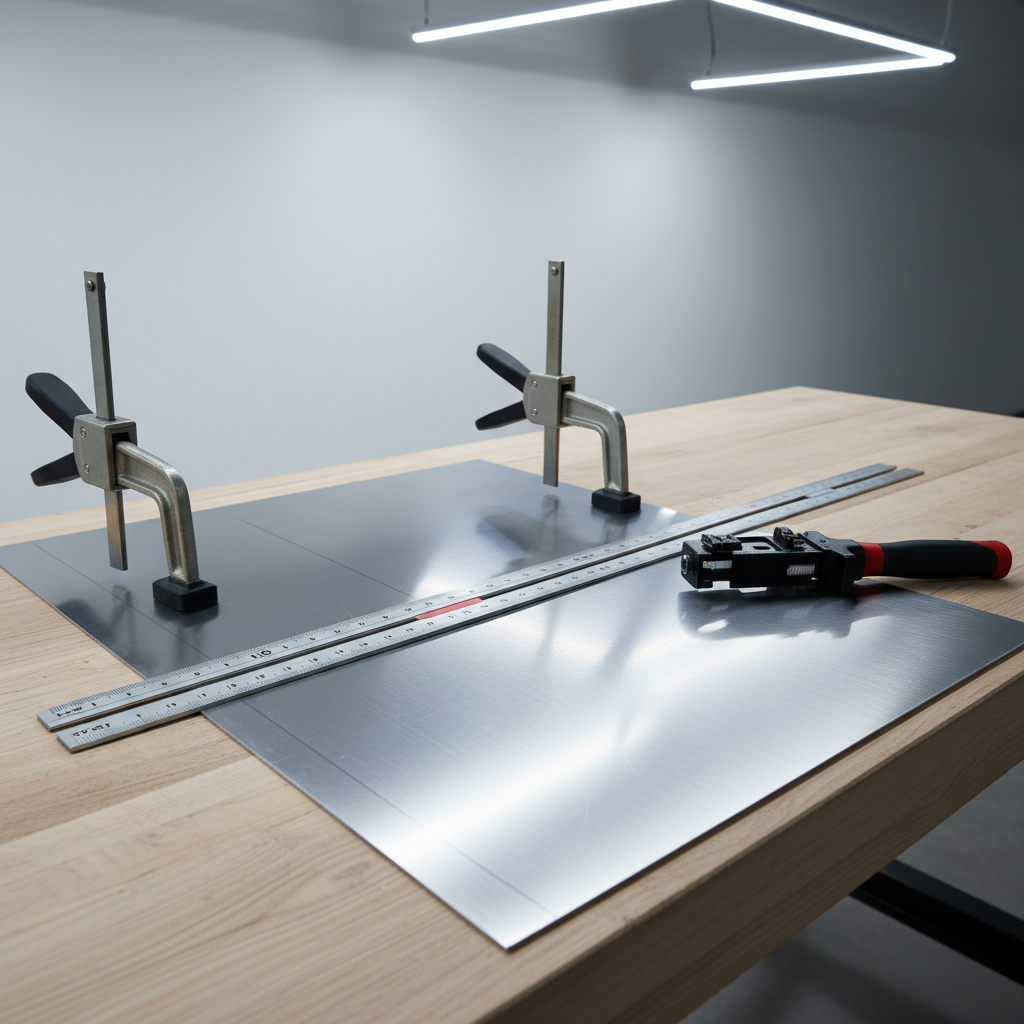
Setup for straighter cuts: support, marking, and guidance
The fastest way to improve straightness is to make the sheet behave. You want consistent resistance so each “bite” lands predictably.
Support the work so it cannot flex
- Clamp the sheet to a bench with a sacrificial backing board under it when possible.
- For larger sheets, support the offcut side too, even with a second clamp and a scrap stick, so it does not droop and pull.
- Keep the cut path near the bench surface, cutting in mid-air makes drift almost inevitable.
Mark the line so you can track it without guessing
- Use a sharp scribe or fine-tip marker that stays visible.
- On shiny metal, a strip of painter’s tape under your line gives contrast and reduces “lost line” moments.
Use a physical guide when the line must look perfect
A straightedge clamped parallel to the cut can act as a steering reference. You usually cannot run the nibbler against it like a router, but you can use it as a visual rail so your hands stop freehand wandering.
Technique that keeps a hand nibbler on a straight path
This is the part most tutorials gloss over. A hand nibbler metal cutter responds better to steady “feed” than to force.
Use a short, repeatable rhythm
- Set the head square to the sheet, then take 3–5 bites while watching the line closely.
- Pause, relax your grip, re-square the head, continue.
That micro-reset prevents tiny angle errors from accumulating into a curve.
Let the tool bite, do not pry it forward
If you push the nibbler ahead between squeezes, the punch can skid and start a diagonal bite. Instead, keep light forward pressure and let the punch action advance the cut.
Stay just to the waste side of the line
If your goal is “straight and clean,” cut slightly on the waste side, then file or deburr to the final line. Trying to cut exactly on the mark often leads to overcorrections.
Correct early, not dramatically
The moment you see the cut drifting, change angle a hair on the next one or two bites. Big steering moves create a wave you will notice forever.
Choosing the right approach: material, thickness, and tool options
Not every “straight line” job should be done with the same tool. If you keep fighting it, you may be outside the sweet spot.
| Job scenario | Hand nibbler fit | What to do for straighter results |
|---|---|---|
| Thin aluminum sheet, short straight cuts | Strong | Clamp, mark clearly, cut on waste side, deburr |
| HVAC duct metal, long runs | Okay | Add support under the path, micro-reset every few bites |
| Thicker mild steel near tool limit | Mixed | Reduce bite speed, check punch wear, consider powered shear |
| Stainless or hardened sheet | Often poor | Test on scrap first, avoid forcing, consider a different cutter |
| Visible edge on a finished panel | Okay with cleanup | Plan for filing, sanding, or edging trim |
According to NIOSH, reducing excessive hand force and awkward wrist postures helps lower strain risk, so if every cut becomes a white-knuckle squeeze, it is reasonable to change tools rather than “push through.”
Common mistakes and safety notes (so you do not redo the cut)
Nibblers are simple, but they still punish sloppy habits. The good news is most fixes cost nothing.
- Skipping deburring: nibbling leaves sharp edges and tiny chips, a quick file pass prevents cuts during installation.
- Cutting without eye protection: chips can flick upward, safety glasses are a sensible baseline.
- Trying to “straighten” a bad line by bending the sheet: bending changes bite resistance and usually worsens drift.
- Ignoring punch wear: if the tool starts tearing, stop and inspect, forcing it can damage the head.
- Over-trusting a thick-gauge claim: thickness ratings vary by metal type, if you do not know the alloy, test on scrap.
If you work around energized equipment, sharp housings, or structural panels, consider asking a qualified tradesperson, safety requirements vary by jobsite and application.
Practical workflow: a repeatable straight-line cut in 10 minutes
When you want a simple routine that works across many projects, this is it.
- 1) Mark: draw your line, then add a second “keep-out” line 1–2 mm into the waste side.
- 2) Clamp: secure the sheet and support the offcut side so it cannot sag.
- 3) Start clean: take a couple of bites slowly to establish the track, staying on the waste side.
- 4) Cut with micro-resets: every few bites, pause and square the head to the sheet again.
- 5) Finish and clean: file scallops down to the final line, then deburr both faces.
Key takeaway: straight cuts come from stable support and small corrections, not from squeezing harder.
Conclusion: getting straight lines is mostly about control, not strength
A hand nibbler metal cutter can produce impressively straight lines on thin sheet when the work stays supported and you cut in small, consistent steps. If you treat the tool like a punch that advances gradually, your line stays honest, and cleanup becomes quick instead of a rescue mission.
If you only do one thing next time, clamp the sheet and support the offcut side, then cut slightly on the waste side and file to finish. That combination fixes more “wavy line” complaints than any other tweak.
FAQ
What metal thickness can a hand nibbler cut?
It depends on the specific tool and the metal type, many models handle thin sheet comfortably but struggle as thickness or hardness rises. If squeezing becomes difficult or the cut starts tearing, treat that as a sign to step back and test on scrap or switch tools.
How do I make a straighter cut without a guide?
Focus on support and rhythm: clamp the sheet, keep the head square, take a few bites, then reset your angle. Trying to “save time” by running continuously often introduces drift.
Why does my cut edge look jagged after nibbling?
Some scalloping is normal, but heavy jaggedness can suggest you are forcing the cut, the head is dull, or the material is outside the tool’s comfort zone. A quick punch/die inspection and a slower feed usually clarifies what is happening.
Can I cut perfectly on the marked line with a hand nibbler?
You can get close, but for clean-looking straight edges, many people cut slightly into the waste and then file to the line. It feels slower, but it is often faster than redoing a panel.
Is a hand nibbler better than tin snips for straight lines?
For thin sheet, snips can be faster on long straight cuts, but they can warp the material. A nibbler tends to distort less, but the edge needs deburring and the process is slower, so it comes down to the finish you need.
How do I reduce hand fatigue when using a nibbler?
Make sure the sheet is supported, keep your wrist neutral, and do not force thick or hard metal. If your tool allows it, a light lubricant on the cut path may reduce drag, but keep the work area clean to avoid slipping.
When should I switch to a powered tool?
If you have long runs, thicker steel, repeated production cuts, or your hands and wrists start taking a beating, a powered shear or nibbler may be more appropriate. For jobsite-critical work, it can be smart to ask a qualified pro what tool matches the spec.
If you are trying to choose a hand nibbler for repeated straight-line work, or you are not sure whether your metal thickness is pushing the tool too far, a quick checklist of your material, cut length, and finish expectations can save time and prevent wasted sheets.