
cable tie set nylon heavy is usually what people search after a frustrating moment: a bundle that keeps slipping, a tie that snaps when you cinch it, or a “heavy-duty” label that doesn’t match real-world use. The good news is you can pick the right nylon tie set quickly once you know what to look for.
This guide breaks down the specs that actually matter for bundling, how to match length and strength to the job, and a few practical tricks that keep bundles tidy without over-tightening.

If you’re buying for home, office, automotive, or light industrial work in the U.S., nylon ties are common because they’re affordable, fast, and flexible. But “heavy duty” can mean different things depending on width, tensile rating, and even the temperature and UV exposure where you use them.
What “heavy-duty nylon cable ties” really means
In most catalogs, “heavy duty” is shorthand for a thicker, wider tie with a higher tensile strength rating than standard 4-inch/6-inch ties. It does not automatically mean “works anywhere.”
Here are the specs that tend to separate a reliable cable tie set from a random bulk pack:
- Tensile strength rating (often listed in pounds): how much pulling force the tie can withstand before failure, under test conditions.
- Width (a proxy for strength and tooth engagement): wider ties typically grip better and resist “tooth slip.”
- Material grade: nylon 6/6 is common; specialty versions exist for UV exposure, heat, or chemicals.
- Operating temperature range: important in attics, engine bays, or outdoor enclosures.
- Indoor vs outdoor: black ties are often chosen for UV resistance, but you still want the product to state UV stabilization if sunlight is a factor.
According to UL Solutions, cable ties can be evaluated for performance and safety characteristics under recognized standards, which is why many buyers prefer products that clearly state compliance and application ratings rather than vague marketing terms.
Common reasons cable ties fail during bundling
When a tie breaks or loosens, it’s rarely “bad luck.” A few predictable causes show up again and again.
1) Over-tightening on soft jackets
Ethernet, coax, and some appliance cords have jackets that compress. You can crank down, think it’s secure, then later the jacket rebounds and the bundle feels loose.
2) Choosing length by guesswork
People buy a one-size pack, then use a short tie on a thick bundle. The ratchet ends up barely engaged, which increases slip risk.
3) Heat and sunlight aging the nylon
Nylon can get brittle over time in hot, dry, or UV-heavy environments. Under those conditions, a standard indoor tie may crack sooner than you expect.
4) Edge abrasion or vibration
In cars, trailers, and machinery, vibration plus a sharp edge can chew through insulation. Sometimes the tie is “fine,” but the cable isn’t.
Quick self-check: what kind of tie set do you actually need?
Before you pick a cable tie set nylon heavy option, run this fast checklist. It saves money and avoids buying the wrong “heavy duty.”
- Bundle diameter: small (USB/desk), medium (TV rack), large (shop/garage runs).
- Environment: indoor clean, dusty garage, outdoor sun, under-hood heat, wet locations.
- Risk tolerance: cosmetic bundling vs safety-critical routing (near moving parts, heat sources, or electrical panels).
- Need for rework: do you want releasable ties, or is one-and-done fine?
- Surface contact: will the tie rub on cable insulation, paint, or a soft hose?
If you’re bundling near electrical equipment, keep in mind that neat routing helps, but it doesn’t replace proper strain relief, grommets, or code requirements. If you’re unsure, it’s reasonable to ask a licensed electrician or qualified installer for guidance.
Picking sizes and strength: a practical table
Product listings can be all over the place, so it helps to map your use case to typical ranges. This table is a buying shortcut, not a universal rule.
| Use case | Typical tie length | Typical width | Notes |
|---|---|---|---|
| Desk cable management (USB, power bricks) | 4–8 in | Narrow to medium | Consider releasable ties if you move gear often. |
| Home theater / network rack bundles | 8–12 in | Medium | Avoid over-tightening on Ethernet; leave a little slack. |
| Garage/shop tool cords and hose bundling | 12–14 in | Medium to wide | Look for stronger teeth engagement, thicker head. |
| Automotive (non-engine bay, light duty) | 8–14 in | Medium to wide | Heat and vibration matter; protect against chafing. |
| Outdoor temporary bundling | 8–14 in | Medium to wide | Prefer UV-stabilized ties; black is common. |
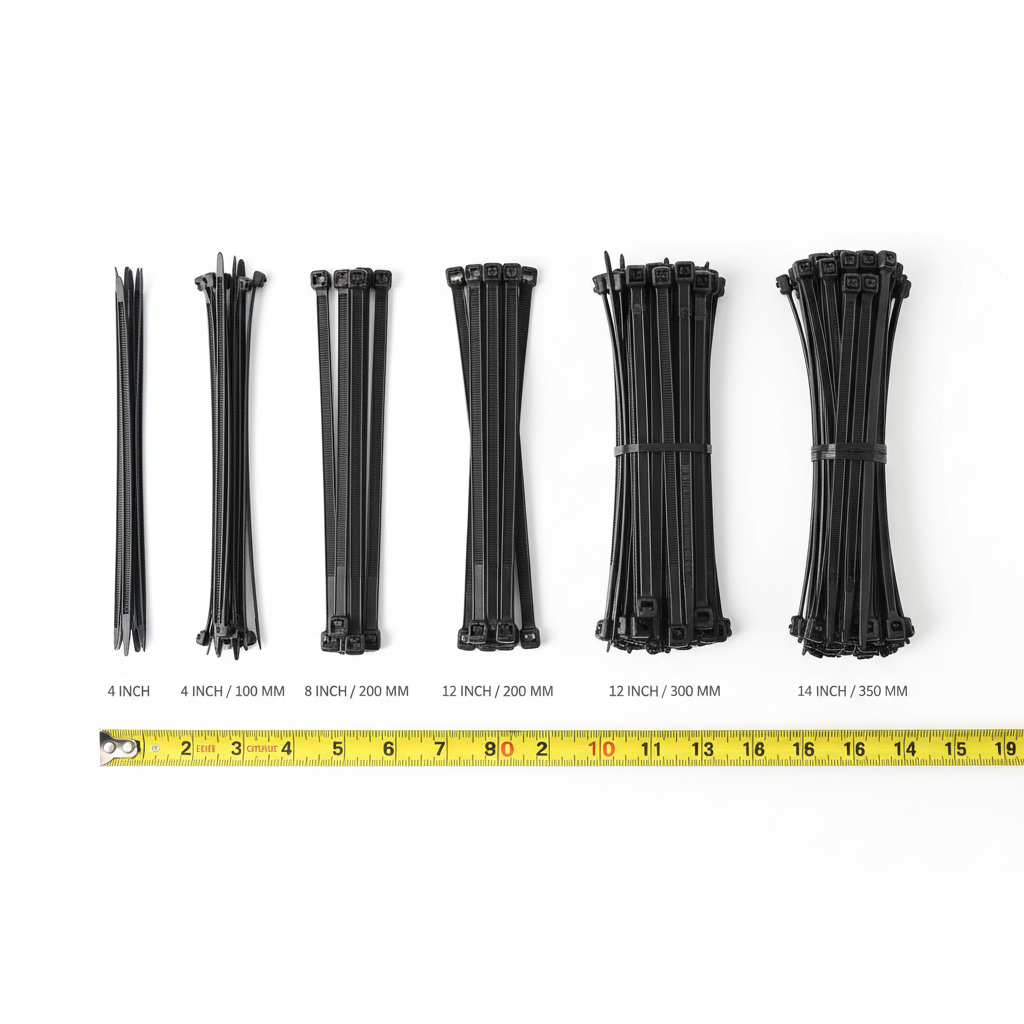
One more real-world tip: when in doubt, go a bit longer. Excess tail is annoying but harmless; a tie that barely reaches is a failure waiting to happen.
How to bundle cleanly without damaging cables
Using a heavier tie is not the same as using it tighter. Clean bundling is mostly about spacing, tension, and protecting the cable jacket.
Step-by-step (works for most indoor bundling)
- Group by function: power separate from data when possible, mainly for organization and easier troubleshooting.
- Add a gentle service loop: a little slack near devices prevents accidental yanks.
- Space ties out: many bundles look better and behave better with ties every 6–12 inches, not every inch.
- Cinch to “snug,” not “max”: you should be able to rotate the tie slightly on the bundle with moderate finger force.
- Trim the tail safely: flush-cut if possible to avoid sharp edges that scratch hands and nearby cables.
If you manage frequent changes, consider mixing in hook-and-loop straps. A cable tie set nylon heavy is great for permanence, but it’s not always the most convenient option for a desk that changes weekly.
Scene-based solutions: which set features matter most
Different environments punish ties in different ways. This is where sets with multiple sizes and types pay off.
Outdoor lines, fences, temporary signage
- Look for UV-stabilized nylon claims in the listing, not just “black.”
- Use longer ties to avoid borderline engagement on thicker items.
- Expect maintenance: outdoor plastic fasteners often need replacement over time.
Automotive and vibration-heavy setups
- Prioritize heat rating if routing near hot components.
- Add abrasion protection where bundles contact metal edges, for example split loom or edge trim.
- Don’t route near moving parts; if you must, consult a qualified mechanic or installer.
Electrical panels and structured wiring
- Keep bundles tidy but avoid compressing cable jackets.
- Choose ties with consistent molding and smooth edges.
- Follow applicable codes and manufacturer guidance; if this is unfamiliar territory, asking a licensed electrician is the safe move.

One thing people don’t mention enough: if you’re bundling data cables, too much compression can contribute to performance issues in edge cases. It’s not guaranteed, but it’s easy to avoid by not over-cinching and by using smart spacing.
Mistakes that waste time (and how to avoid them)
- Buying a single length only: a set with a few lengths reduces ugly “daisy-chaining” and weak holds.
- Assuming thicker equals safer: wide ties can damage soft hoses and cable jackets if over-tightened.
- Ignoring cut-tail hazards: angled tails are surprisingly sharp; flush cutting matters in tight spaces.
- Using indoor ties outdoors: if sunlight is part of the job, pick a product designed for it.
- Skipping abrasion protection: the tie may survive, but the cable insulation may not.
Key takeaways before you buy
- “Heavy duty” should be verified with width, tensile rating, and application details, not the label alone.
- Length solves more problems than people expect, especially on thicker bundles.
- Environment drives material choice: UV, heat, and vibration change what “good” looks like.
- Bundling technique matters: snug tension, safe trimming, and abrasion control prevent most failures.
Conclusion: a smarter way to choose a nylon cable tie set
A good cable tie set nylon heavy purchase comes down to matching the tie to the bundle and the environment, then using it with a light touch instead of brute force. Pick a set with multiple lengths, confirm the ratings you actually need, and you’ll spend less time redoing messy bundles.
If your next project involves heat, outdoor exposure, or anything near critical electrical wiring, it’s worth slowing down and checking the tie’s application notes, and when needed, consulting a qualified professional for the safest approach.
FAQ
What does “heavy duty” mean for nylon cable ties?
Usually it points to wider ties with higher tensile strength ratings, but the exact meaning varies by brand. Check width, tensile rating, and whether the product calls out UV or temperature performance for your use.
Are black nylon cable ties always UV resistant?
Not always. Black color often correlates with outdoor use, but many listings still require an explicit UV-stabilized claim to feel confident about long-term sunlight exposure.
How tight should I cinch a cable tie when bundling wires?
Snug is the goal. If you’re flattening cable jackets or leaving deep indentations, it’s too tight. Many bundling issues come from over-tightening rather than under-tightening.
Should I use cable ties for Ethernet and data cables?
You can, but be gentle. Over-compression can be unhelpful in some setups, so spacing ties out and cinching lightly is a safer habit. Hook-and-loop straps are often easier for frequent changes.
What length should I choose for a thick bundle?
Many people underestimate diameter. If you’re between sizes, the longer option typically gives better tooth engagement and less stress on the head.
Can nylon cable ties be used in an engine bay?
Some can, but only if the temperature rating and application notes support it. Heat cycling can age nylon faster. If the routing is near hot or moving components, a professional assessment is a good idea.
Is it okay to reuse nylon zip ties?
Standard nylon ties are designed for one-time use. If you need rework, look for releasable ties or use hook-and-loop straps so you don’t compromise holding strength.
What’s the safest way to cut the tie tail?
Flush cutters reduce sharp edges. If you only have scissors, cut carefully and feel for a sharp corner before placing the bundle where hands will reach.
If you’re trying to standardize your shop or facility and want a more predictable setup, a mixed-size heavy-duty nylon set plus a small pack of releasable ties tends to cover most day-to-day bundling without overbuying.