
wheelbarrow tire replacement is usually straightforward, but the annoying part is choosing the right tire size and style so you don’t end up with a wobbly wheel or a flat two weekends later.
If your wheelbarrow feels like it’s fighting you, the tire is often the culprit: dry rot cracks, a bent rim, a worn hub, or a tube that won’t hold air. Fixing it restores control, reduces strain on your back, and makes hauling soil or mulch feel normal again.
This guide focuses on what actually matters in the U.S. market: how to identify your tire size, whether to go pneumatic or flat-free, what tools make the job easier, and a few gotchas that cause most “why doesn’t this fit?” headaches.
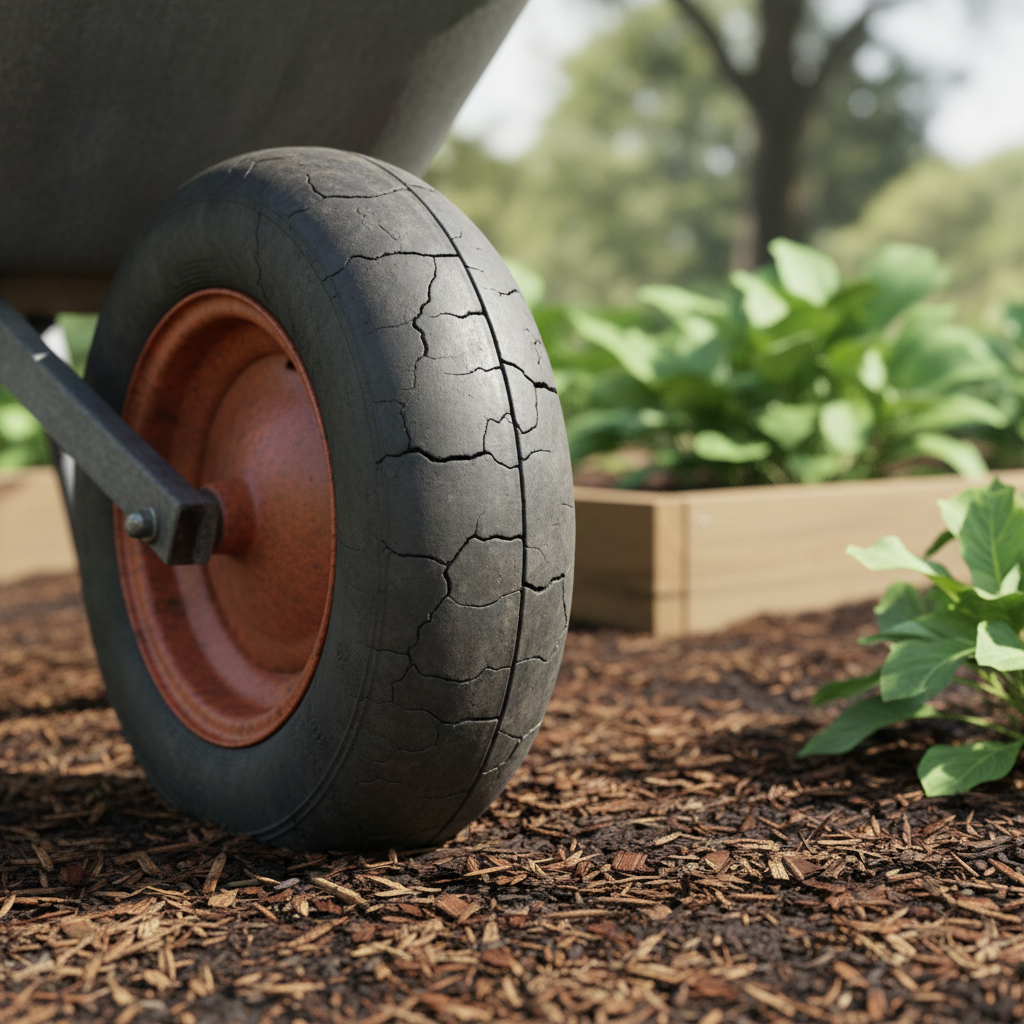
Why wheelbarrow tires fail (and what that tells you)
Most tire problems look the same from a distance, but the cause matters because it changes what you should replace: just the tube, the tire, or the whole wheel assembly.
- Sidewall cracking (dry rot): Common if the wheelbarrow sits outdoors or in a hot shed. In many cases, replace the tire, not only the tube.
- Slow leaks: Often a puncture, a pinched tube, or a valve issue. If the tire casing still looks healthy, a new tube may be enough.
- Constant flats from thorns/nails: Consider a flat-free tire or at least a heavier-duty tube and sealant, depending on your tolerance for maintenance.
- Wobble or scraping: Can be a worn bushing/bearing, bent axle bolt, or rim damage. Sometimes the smart move is replacing the complete wheel.
- Tire won’t seat evenly: Rim can be bent, or bead area is damaged. Fighting it rarely ends well.
According to OSHA, wheelbarrows and similar equipment should be maintained so they remain safe to use, which in practice means fixing unstable wheels before they cause a tip-over or loss of control.
Quick self-check: do you need a tube, tire, or whole wheel?
Before ordering anything, spend two minutes confirming what’s actually failing. This saves the most money and the most time.
- Tube-only makes sense if: tread and sidewalls look solid, no major cracks, rim is straight, and the hub spins smoothly.
- Tire + tube makes sense if: dry rot cracks appear, bead area looks chewed up, or the tire feels stiff and brittle.
- Whole wheel assembly makes sense if: rim is bent, hub is sloppy, bearings/bushings grind, or the axle hole is wallowed out.
If your wheelbarrow is a common big-box model, a complete wheel replacement can be less frustrating than wrestling an old rim with a new bead.
How to confirm the right size (without guessing)
For wheelbarrow tire replacement, the size mismatch problem usually comes from reading the markings incorrectly or ignoring rim size. Check the tire sidewall first.
Where to look and what the numbers mean
- Common marking: 4.80/4.00-8 (fits an 8-inch rim). This is one of the most common U.S. wheelbarrow sizes.
- Another format: 4.80-8 or 4.00-8, still pointing to an 8-inch rim.
- Rim diameter matters: An “8” in the marking usually means the rim diameter, not the overall tire height.
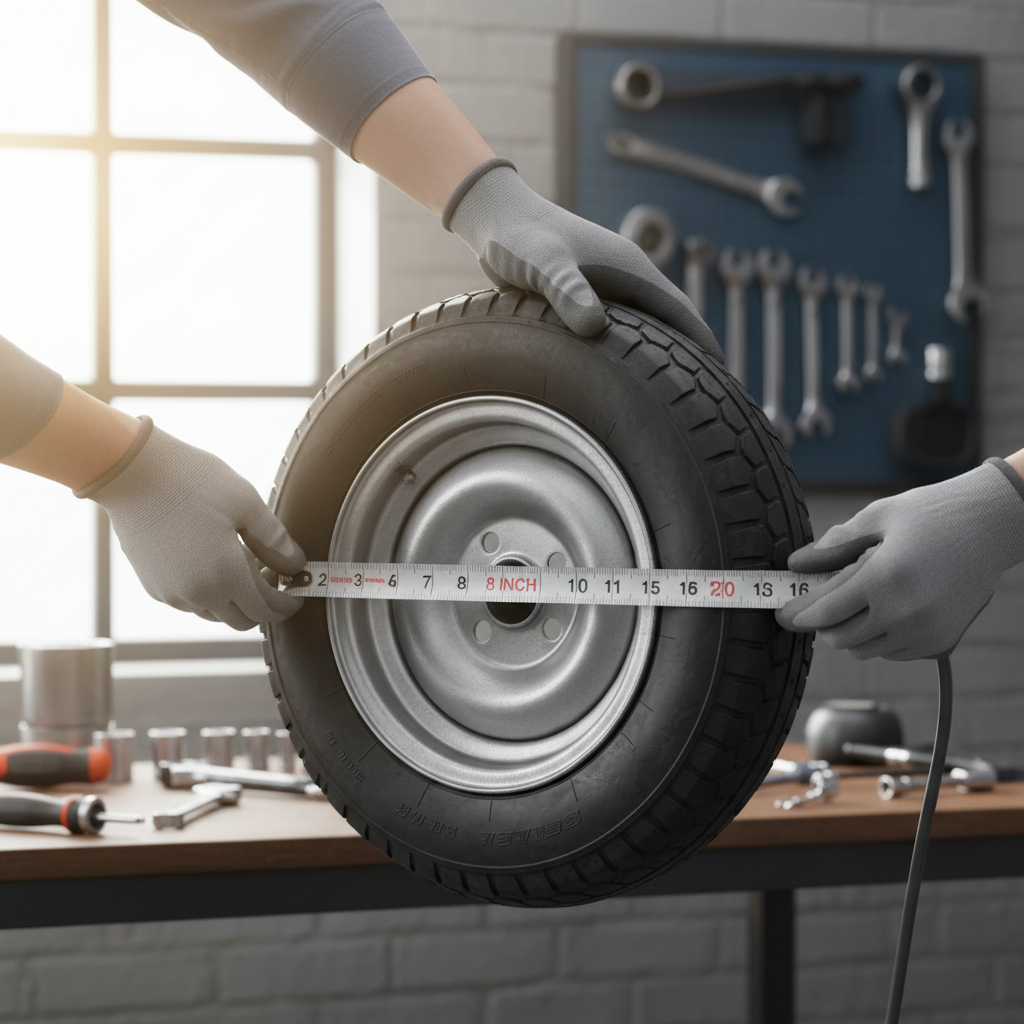
If the sidewall text is gone, measure the rim diameter (across the bead seat area) and approximate tire width. If you’re unsure, bringing the old tire (or at least clear photos with a tape measure) to a local hardware store often prevents ordering the wrong part.
Pneumatic vs flat-free: choosing what fits your garden work
This is the decision that changes your day-to-day experience. Pneumatic rolls softer, flat-free eliminates the “why is it flat again?” cycle. Neither is perfect for everyone.
| Option | Best for | Trade-offs |
|---|---|---|
| Pneumatic (air-filled) | Uneven lawns, gravel paths, heavier loads where cushioning helps | Needs air checks, can puncture, may need a tube |
| Semi-pneumatic | Light-to-medium use, fewer flats with some give | Ride can feel firmer than air-filled, not always available in every size |
| Flat-free (solid foam/rubber) | Thorns, construction debris, “I don’t want maintenance” owners | Often heavier, can feel bouncy on hard surfaces, sometimes less traction in loose soil |
My practical rule: if you’re hauling mulch and soil on a typical yard and you don’t mind checking pressure monthly, pneumatic is usually nicer. If your property eats tubes for breakfast, flat-free pays for itself in sanity.
What to buy: a simple checklist before you hit “Add to Cart”
Shopping for wheelbarrow tire replacement is easier when you treat it like matching a few specs, not hunting for a magical “universal” tire.
- Size: match the sidewall marking (example: 4.80/4.00-8).
- Load rating: choose a tire rated for at least what you typically haul, with some margin. If you routinely move stones or wet soil, don’t go ultra-lightweight.
- Tread: ribbed tread tends to track straight on pavement, blocky tread can grip better in loose ground, but details vary by brand.
- Tube and valve: if buying a tube, confirm valve type and angle. A straight Schrader valve is common, angled stems can be easier on certain rims.
- Wheel hardware: if you’re replacing the whole wheel, confirm axle/bore diameter and hub length so it fits between the wheelbarrow legs.
Key point: if your rim is rusty and sharp around the bead area, a fresh tube can fail early from abrasion. In that case, replacing more than one component is often the cheaper outcome.
Install steps that actually reduce frustration
wheelbarrow tire replacement can be a 15-minute job or an hour of struggle, usually depending on bead seating and whether the tube gets pinched.
Tools that help (you may already have them)
- Tire levers or sturdy flat tools, used carefully to avoid rim damage
- Adjustable wrench or socket for the axle nut
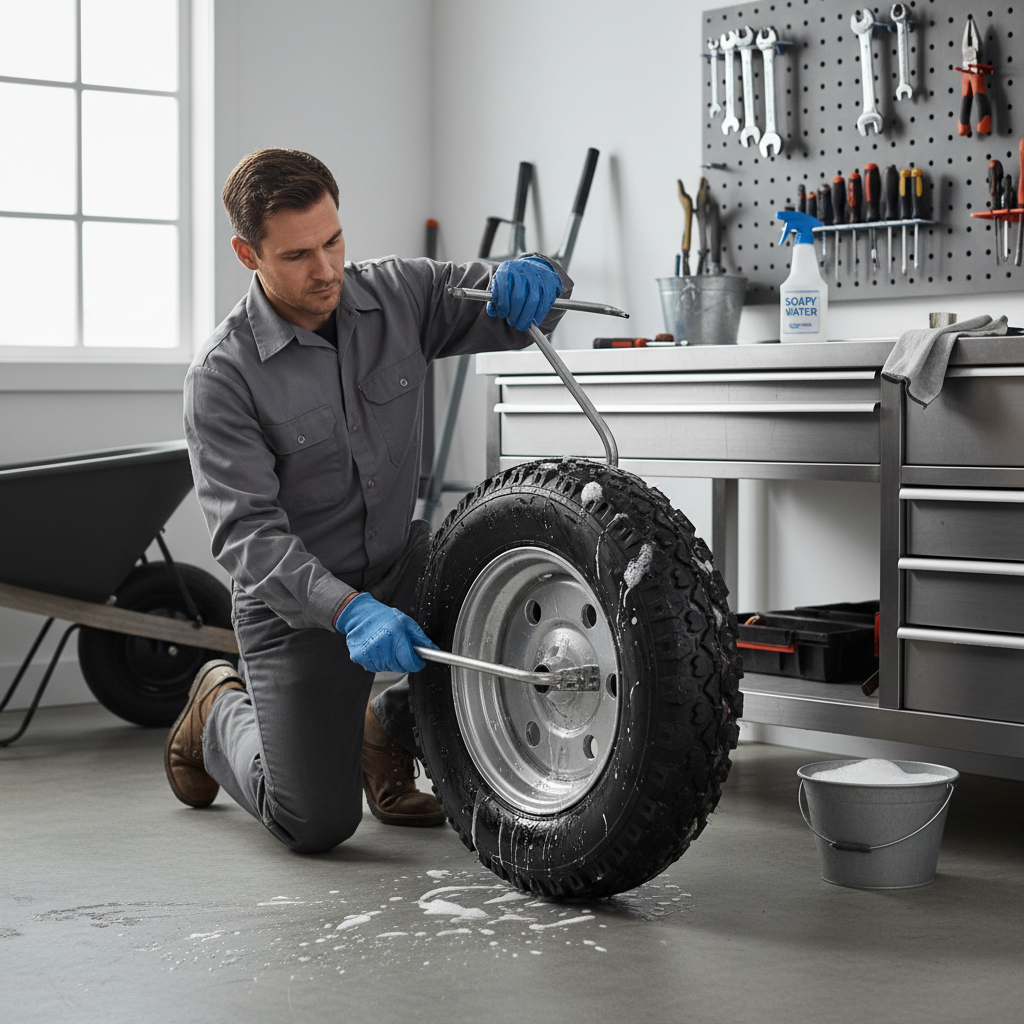
- Soapy water in a spray bottle to help the bead slide into place
- Hand pump or compressor with gauge
- Work gloves and eye protection, especially if the rim is rusty
Step-by-step (pneumatic tire with tube)
- Remove the wheel, then fully deflate and break the bead free from the rim.
- Pull one side of the tire off the rim, remove the tube, then inspect the inside of the tire for thorns, nails, or sharp debris.
- Lightly inflate the new tube so it holds shape, tuck it into the tire, then align the valve through the rim hole.
- Work the bead back onto the rim, using hands first, tools second. Keep the tube pushed away from where the bead slips over the rim edge.
- Spray a little soapy water around the bead, inflate slowly, and watch for even seating all the way around.
If the bead refuses to seat, stop and check for tube pinches or a twisted tire. Forcing higher pressure can be risky, and in many situations it’s smarter to consult a tire shop or hardware store that handles small tires.
Mistakes that waste time (and how to avoid them)
These are the recurring issues that make people think they “bought the wrong tire,” when it’s often an install or compatibility detail.
- Ignoring rim condition: rust burrs and bent flanges cut tubes and prevent sealing, clean and smooth the rim or replace it.
- Under-inflating and calling it done: low pressure invites pinch flats and makes the wheelbarrow feel unstable.
- Over-inflating to seat the bead: may damage the tube or tire, follow the tire’s sidewall pressure guidance.
- Mixing “same diameter” with “same fit”: two tires can look similar but fit different rim sizes.
- Skipping hub checks: a new tire won’t fix a sloppy bushing or a worn axle bolt.
According to the CPSC, consumers should follow product instructions and safety guidance for maintenance and replacement parts; for small tires that means respecting inflation limits and using compatible components.
When it’s worth getting help
If your wheelbarrow is used for heavier jobs, or you’ve already tried a tube swap and it keeps failing, outside help can be the most efficient move.
- Rim damage or severe rust: a shop can quickly confirm if the rim is salvageable.
- Bearing/bushing issues: a hardware store or small engine shop may help match parts if the model is older.
- Bead won’t seat safely: if you find yourself tempted to “just add more air,” pause and ask someone with proper equipment.
Conclusion: a smoother roll is usually one good decision away
wheelbarrow tire replacement goes best when you identify what failed, match the size exactly, then pick a tire style that fits how your yard treats wheels. If you want the lowest hassle, start by reading the sidewall, decide pneumatic versus flat-free based on your flat history, and replace the whole wheel when the hub or rim looks questionable.
Your next step is simple: check the sidewall marking today, then order the tire or wheel that matches it, along with a tube if your setup needs one. That small prep tends to eliminate 80% of the frustration.
FAQ
What is the most common wheelbarrow tire size in the U.S.?
Many garden wheelbarrows use 4.80/4.00-8, but not all. The safest approach is reading the sidewall marking on your existing tire or measuring the rim diameter if the text is missing.
Can I replace only the inner tube?
Yes, if the tire casing is still in good condition and the rim edge is smooth. If you see dry rot cracks or the tire feels brittle, replacing the tire and tube together usually prevents repeat issues.
Are flat-free wheelbarrow tires worth it?
They can be, especially if thorns, nails, or debris cause frequent flats. The trade-off is a firmer ride and often a heavier wheel, which some people notice on uneven lawns.
Why does my wheelbarrow wheel wobble after replacing the tire?
Wobble often points to the hub, bushings, bearings, or axle hardware rather than the rubber. A worn bushing can make a brand-new tire feel unstable, so inspect the hub fit and axle bolt for play.
How much air should I put in a wheelbarrow tire?
Use the tire’s sidewall guidance when available, since pressure ranges vary by tire. If you’re unsure, inflate gradually and check stability; over-inflation can be unsafe, so consider asking a local shop.
Do I need special tools to change a wheelbarrow tire?
Often no, but tire levers and soapy water make the job easier and reduce tube pinching. If the rim is rusty, gloves and eye protection are a good idea.
Should I buy a complete wheel instead of a tire?
If the rim is bent, heavily corroded, or the hub spins rough, a complete wheel is frequently the cleaner fix. It costs more upfront, but it avoids fighting parts that can’t seal or roll correctly.
If you’re trying to pick parts online and want a more low-stress route, focus on confirming your exact size and hub measurements first, then choose between pneumatic comfort and flat-free convenience based on how often you deal with punctures.